
Many years ago I visited my sister in Stowe, Vermont with my parents and I have a vague memory of sipping some honey wine she made. I guess that was technically my first experience with Mead. Mead is a honey wine, if you will, so a post about it fits here. Thistlerock Mead is less than 5 miles from my house, too, which makes it super convenient. Since I found a way to take Friday off, it just made sense to swing by after a few errands.
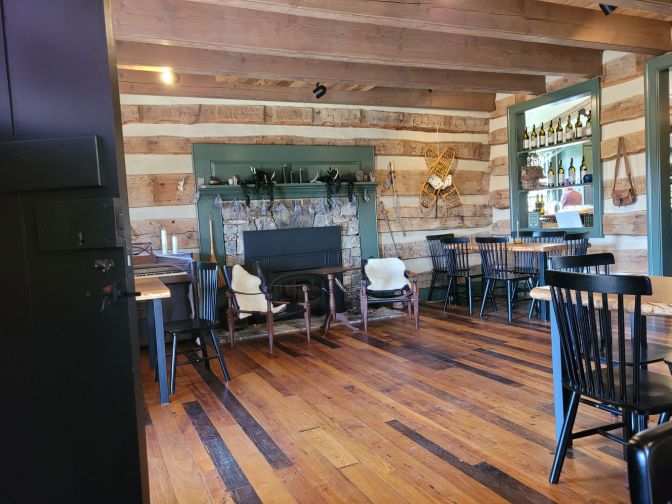
Thistlerock Meadery has a very nice property. The main building (called the “Tavern”) is a restored log cabin and is very nicely arranged. They built their production space out of repurposed materials from a barn that was on the property when they purchased it. The property overall is gorgeous and serene. I may have been their first customer of the day, showing up around 1:30 p.m. so it was quiet and beautiful. Regular readers know I don’t love the crowds. The tasting room is appointed with furnishings that truly make it feel like a Tavern. A crowd would still do well here since there are many spaces to gather with your party and enjoy.
Their menu has five meads they produce on it, meads from other sites, and a few wines from other sites. They also have a food menu, so you can sit and enjoy your afternoon or early evening (on the weekends).
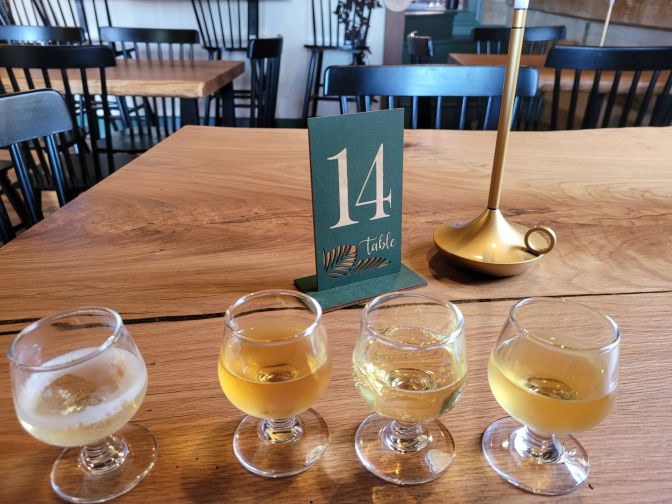
I went for the tasting flight of four meads, all from Thistlerock. I was expecting a very sweet, almost syrupy sensation when sipping, but it wasn’t anything like that. In fact, the first one, their “Piedmont Wildflower” (pictured on the left), was quite dry. Amanda described their meads as semi-sweet, but I didn’t pick up much sweetness at all, and I’m very sensitive to that. There was some carbonation to it, and for the first moment of the sip, it almost felt like a beer, but the flavors were much brighter than beer. It was a fun taste, and I really enjoyed it.
The second glass was their “Acacia.” This Mead is one they produce from honey they purchase, not from their own farm. I wondered whether that was why it was more opaque in the glass. I really liked this one – again, not sweet, but drier notes. Unlike grape wine, there is no sense of acidity to Mead, which makes sense. That creates more muted layers of flavor that flow softly across your palate as you sip. There is definitively a honey taste on this one. This was enjoyable.
The third pour was “Lavender Fields.” It presented a clear aroma and taste of lavender as I sipped. I found this to be a very pretty pour. The two ounces was plenty for me, while I enjoyed it, I don’t know that I could have an additional glass. It wasn’t sweet, but I could definitely see it as a dessert.
The final selection was “Coffeemel.” For this pour, there was a clear aroma of coffee and the taste was clear and pure. I adored this one, and it probably ended up being my favorite. I don’t think my work colleague reads this, so I can safely share that I purchased a bottle for him for his birthday. Again, no sense of sweetness for me, but I enjoyed the coffee sensation with the clear honey.
Amanda brought me a sample of a fifth mead too – this one was red and had berry flavors in it. It was made by another local meadery (though I cannot recall which one she mentioned, and I didn’t bring my notebook, darnit, so I didn’t log anything other than what stuck in my foggy brain). This was fun, but sweeter than the others. If you enjoy sweeter wines and drinks, you will love this – it’s definitely a great summertime sip.
One thing I found very interesting about the Mead is that it really is a different experience from grape wines. The lack of acidity in this Mead makes it quite a different experience, and I could see spending a day at a meadery being a blast, but also I would not get the same sense of a need to pace and limit myself – you don’t get the same sense of having had alcohol. Caution is urged here. While some say I have a good sense of structure in wine, I didn’t pick up those elements here, and it’s hard for me to discern specifics in Mead. Definitely the different berry and other flavors that are added come through clearly, but in terms of various honey accents, I didn’t feel equipped to pick up as much as I can with wine.
They were out of the Mead made in Bourbon Barrels, which bummed me out. My coworker is pushing me to try other bourbons and expand those horizons, so this could have been the perfect gift for him. Amanda says that another lot will be released in a few months, so I will watch for that and go back.
Thistlerock appears to be very socially responsible, with a goal for Carbon Neutrality described on their site (they may have reached it already – note the Rivian in the cover pic). They are involved with various causes, and the Coffeemel has proceeds supporting refugee education where the coffee beans are sourced. The broader farm enterprise is focused on sustainability, and that aligns well with my values (probably better than I often do!).
So that is my report on my first experience with Mead. I clearly have a lot to learn, and it would be fun to unpack more about it. Amanda clearly knew a lot, but had several other customers to help, and I wasn’t going to deluge her with my questions. I’ll definitely go for another visit and hopefully get a chance to learn more. I urge folks to check out Thistlerock, and Mead as a whole, because variety is the spice of life, and the next thing you try may become your new favorite thing.

 My NoVa Wine Blog
My first Mead was a Bunratty Mead made here in Ireland.
It tasted a lot better than I expected!
LikeLike
both of my experiences with mead now have been unexpected. I really enjoyed it – I expected it to either be sickeningly sweet or more like beer, and it’s been neither. I will keep checking Virginia mead out!
LikeLiked by 1 person