
The Visit
I organized a vineyard visit for the Out and About group to Colombe Vineyards in Lovingston, where Julie Linker grows the wines for her Delve label. The Mount Alto crew, some of whom live nearby, also joined us, and that added a lively mix to the day. With a smaller group gathered, we had the rare chance to really engage with Julie, to hear about her vision, and to enjoy the back-and-forth when winemakers we respect start talking shop. It was one of those perfect Saturdays: a gorgeous day, good friends, and great wine.
Revisiting Delve
I first wrote about Delve when it launched a year ago, and I remembered how much I enjoyed the inaugural Roussanne and Cabernet Franc. Those 2023 wines weren’t designed with bold earthiness or heavy tannins. Instead of boldly announcing themselves loudly, they were fresh, relaxed, and approachable—wines that felt just right for sharing with a group of friends with mixed tastes. The Roussanne, in particular, is beginning to show extra depth with a little age, layering flavors in a way that keeps it fun and engaging. While most of that vintage has already sold, Julie still has some tucked away in her library and you may find some at the Collective, or in a wine shop.
Tasting Through the Lineup
We began with the 2023 Roussanne, sourced from Bellefox. A year of age has given it a graceful complexity, and it provided a nice contrast to the 2024 Aurora. The Aurora, made from estate-grown Roussanne with a touch (well 20%) of Albariño, has changed since I last tasted it at the Wine Collective in June. The Albariño brightens the wine with a crisp edge, while the Roussanne layers in a calm richness. This is the kind of wine you’d reach for at the end of a long workday—refreshing and light and in a year or so that Roussanne will add a lot of complexity I suspect.
Julie spoke with real joy about planting the Colombe site in 2021, transforming what was once a field into a vineyard now home to Roussanne, Albariño, Cabernet Franc, and Petit Verdot. The property sits behind the former Democracy Vineyards, with vines still in the ground there being used by Valley Road. With its excellent slope and drainage, the site offers both strong fruit and a sense of personal peace for Julie. She finds happiness in tending the vines, walking the rows, checking the deer fence, and monitoring ripeness as harvest approaches.
Next came a Cabernet Franc comparison. We tasted the 2023, grown at Beacon Tree, alongside the 2024 estate vintage. The 2023 is becoming a classic example of Virginia Cabernet Franc: beautifully ripe fruit, aging with elegance, softening around the edges. The 2024, meanwhile, is a little bolder, with darker fruit and a little more vigor. I appreciated how clean it felt—no green pepper notes at all, just pure ripe fruit. Even young, it was enjoyable to sip and promised versatility for food pairings. Though not yet released, I was lucky enough to take home two bottles. Keep an eye open folks – this is going to be available soon.
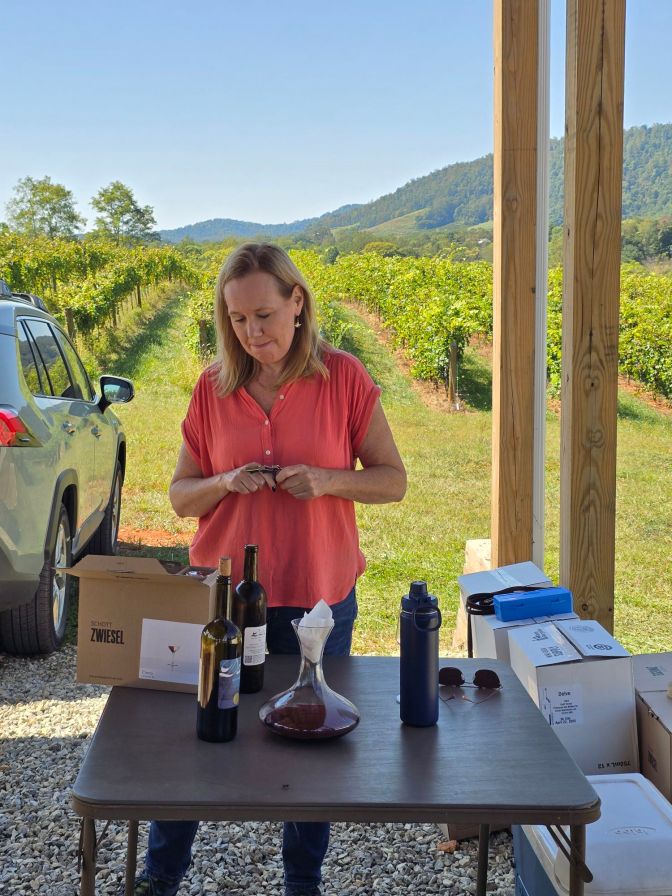
Julie set the final wine up for a fun comparison. She poured half of a bottle of the 2024 Petit Verdot into a decanter and left half in the bottle. I note that one year is very young for a Petit Verdot, but it didn’t seem to be holding this wine back. From the bottle, the wine remained tighter but still flavorful, while in the decanter, the wine opened beautifully, with aromas of plum, earth, and dark fruit rising from the glass. Petit Verdot is one of my favorite Virginia grapes, and this wine was no exception. The decanted version was plush and captivating—so much so that Julie and Camila made sure I had a second pour. I brought home a bottle with plans to give it a good bit of time in the decanter before enjoying it.
In the Vineyard
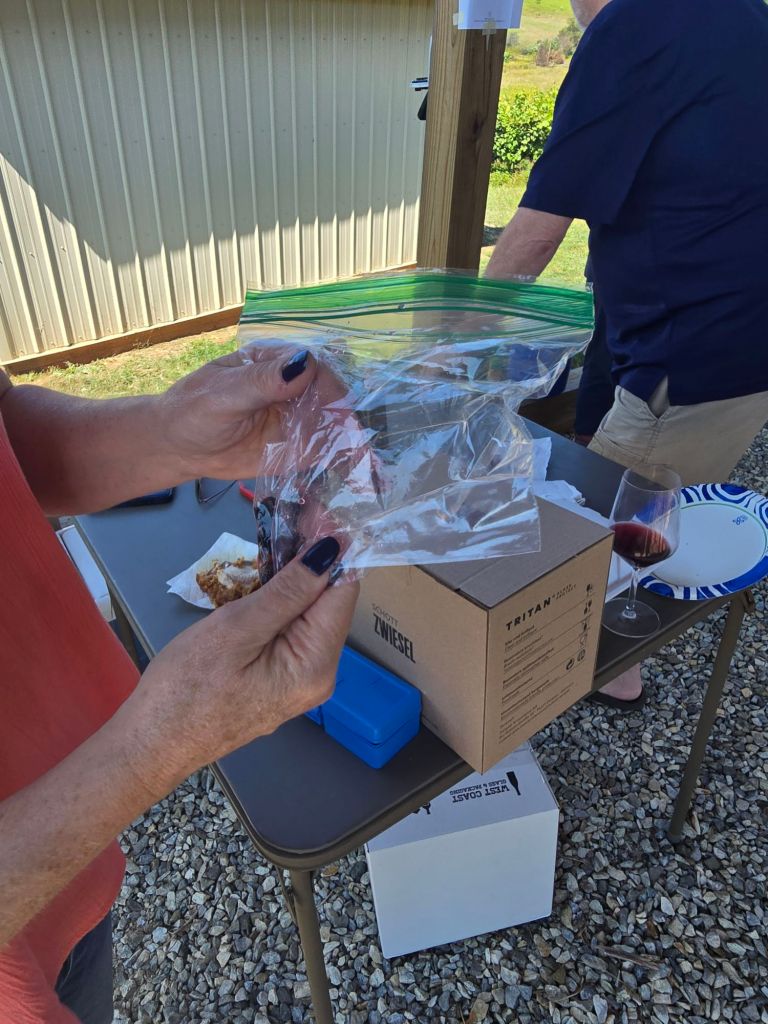
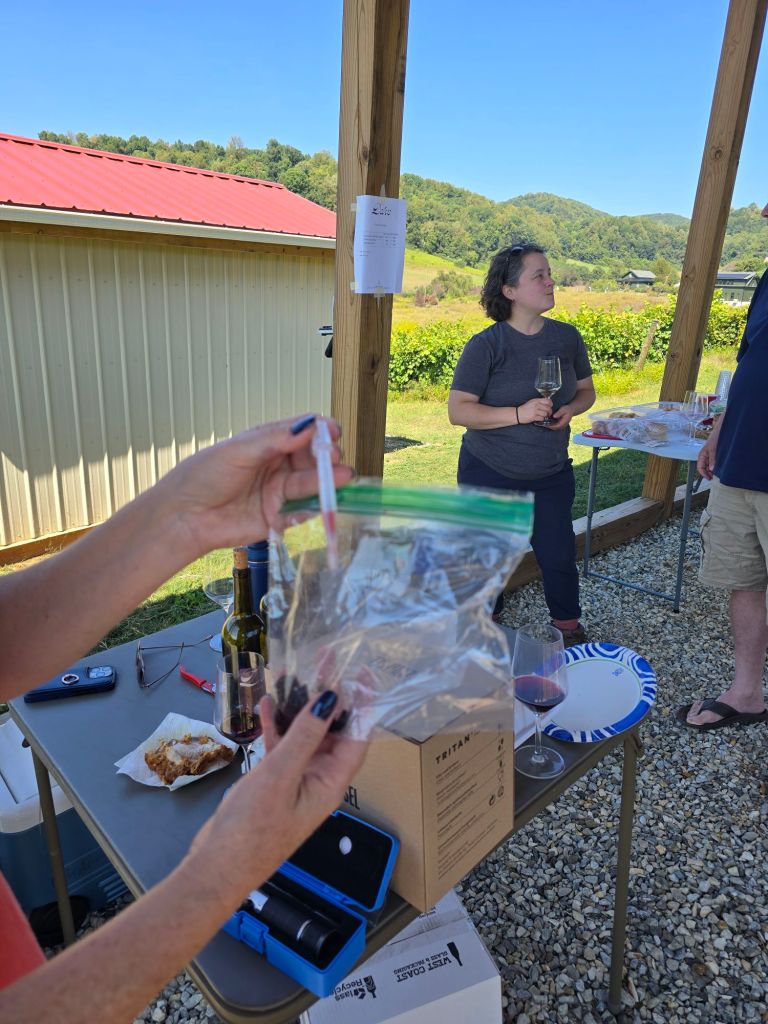
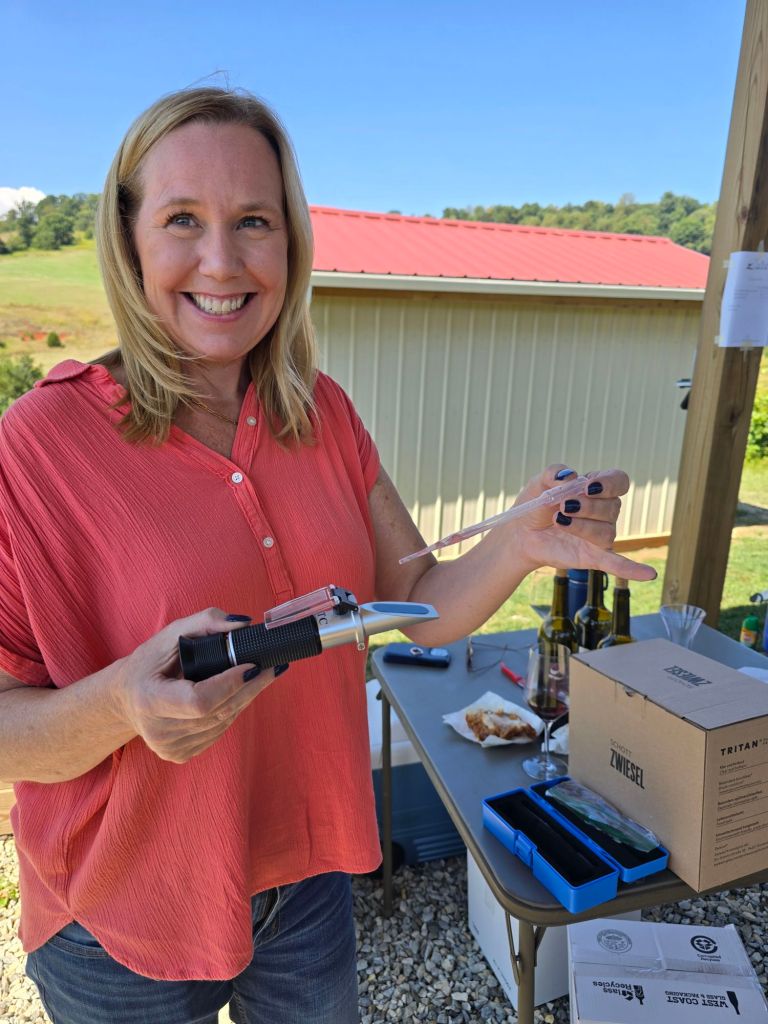
Julie gave us the opportunity to walk through the vines. She brought some berries in and we sampled Albariño and Roussanne berries, while Robert discovered what he thought might be a stray Pinot Gris vine fully through veraison. At one point Julie pulled some Petit Verdot berries, crushed them into a bag, and showed us how she measures sugar levels with a refractometer. Watching the reading climb to 22.9 brix—up more than a point from the previous week—was a thrilling glimpse of harvest being near – Julie expects to pull the Petit Verdot and Cabernet Franc grapes in over the course of the week.
Farming Philosophy
Like a growing number of small batch producers in Virginia, Julie favors a low-intervention approach. She avoids heavy chemical spraying, focuses on healthy farming practices, and uses minimal new oak in the cellar. For her, the vineyard is not just a workplace but a place of calm, and she wants her wines to reflect that same sense of balance and peace.
Looking Ahead
Julie mentioned that there may be a Tannat and Petit Verdot blend aging in her cellar right now, which excites me because those two varieties are among my Virginia favorites. Julie doesn’t have a tasting room and has no immediate plans to build one. Instead, she leans on the Virginia Wine Collective as her main outlet, sometimes hosting bar takeovers where she can share her wine and Delve’s story directly with customers. Still, nothing compares to being in the vineyard itself, hearing the grower describe her journey while sipping the wines that grew under her care.
Reflections
I chilled and took a bottle of Aurora to a neighbor’s house for a block party the evening after this visit, and it was a huge hit. People described it as relaxing, pleasant and refreshing. They asked about the vineyard and whether I’d recommend a visit, and I told them they should definitely swing by the Wine Collective to check out Delve and the other offerings. People said they’d never heard of the Roussanne grape. It was serendipity that the vineyard visit and the party lined up like this, and I love sharing wine that folks have never tried that they enjoy.
I hope you’re balancing your time at some of the bigger and well-known wineries with visits to small-batch growers and makers. While California can create delicious, big, consistent wines, their small producers tend to be “boutique” and very pricey. Virginia’s small producers tend to be pushing the edges, going after something new, different, and exciting, and bringing forth really interesting wines and reasonable prices. This is why I stick with Virginia – our wines show the growing season and the land we grow on clearly, and winemaker treatment brings forth an exciting blend of art, science, and farming. What small batch wines are in your glass?

 My NoVa Wine Blog