
Cellar Reflections is a series I’m writing to come to grips with a few essential wine-lover questions: What Virginia wines do I choose to drink now, and which do I hold onto and age? Why do certain varieties draw me back over and over? Do I really have favorites? (Of course I do.)
In this series, I’ll unpack what I tend to experience with certain grapes—whether as single varietals or as part of a blend—and what it is about them that keeps me reaching for another bottle.
Why Petit Verdot Works so Well In Virginia Wine
I can’t remember a time in the last 20 years when I didn’t think Petit Verdot was a rock star in Virginia wine. While Tannat was my first big, bold red grape love, Petit Verdot was always close behind—and when the two showed up together in a blend, I was in absolute hog heaven.
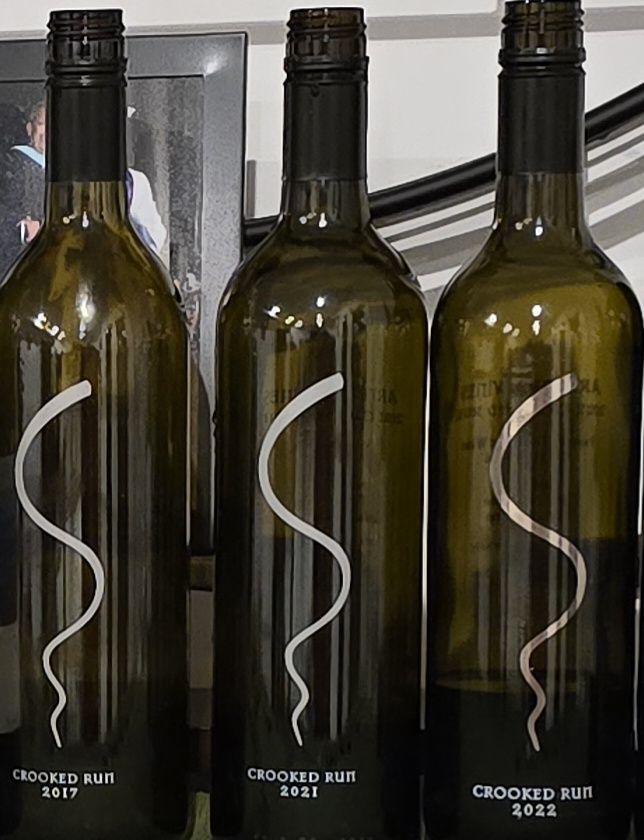
Petit Verdot is a grape that manages Virginia’s climate well. The vines stop pumping water into the grapes even if it continues to rain. It handles humidity well, and doesn’t mind our very swingy climate. Whether summers are cooler and wetter or hotter and dryer, you get a grape that produces full fruit and carries strong tannins straight through harvest. The acidity can make an amazing Rosé as it does at Arterra and King Family or it can be a gorgerous standalone dark red thriller.

As I frequented more Virginia wineries, my interest in Petit Verdot only grew. Controversial opinion: I was always surprised that Cabernet Franc was so often crowned the Virginia grape. My experiences with it felt bifurcated—some bottles were lovely and fruit-forward, others heavily oaked or leaning grassy, peppery, and underripe. After enough that didn’t match my style, I found myself hesitating to order it at all.
Petit Verdot, on the other hand, showed up with consistency. Across wineries, it carried intensity and backbone in a way that felt reliable and unmistakable. For me, Petit Verdot earns the title of the Virginia grape.
Petit Verdot: Solo Superstar and Team Player
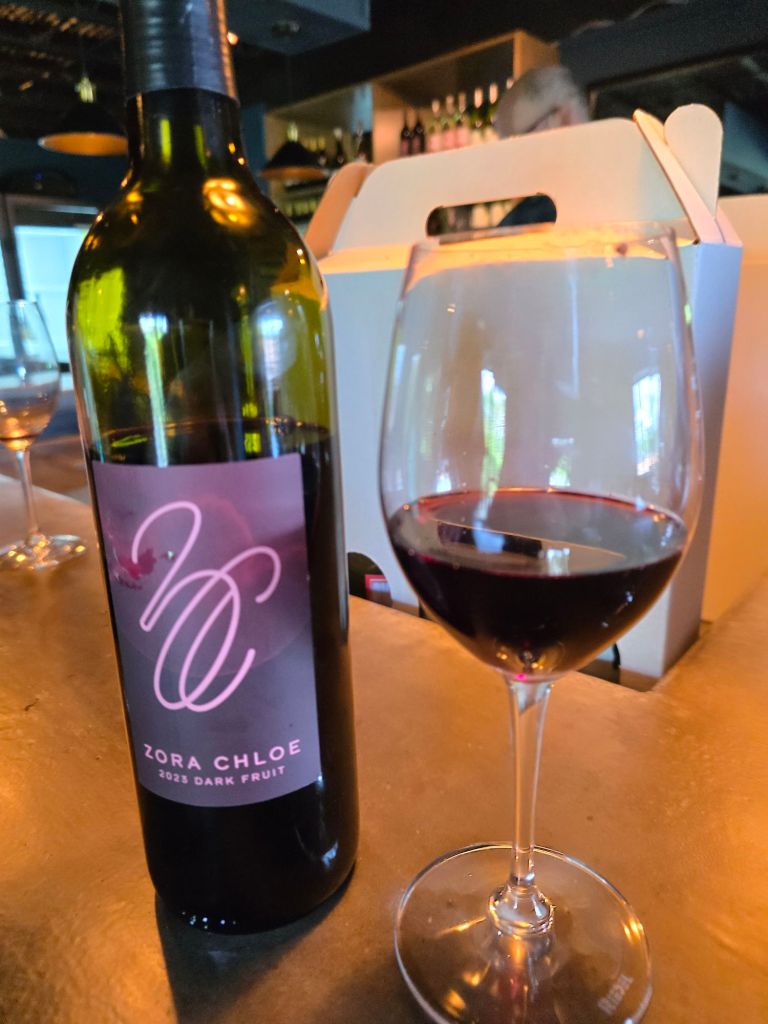
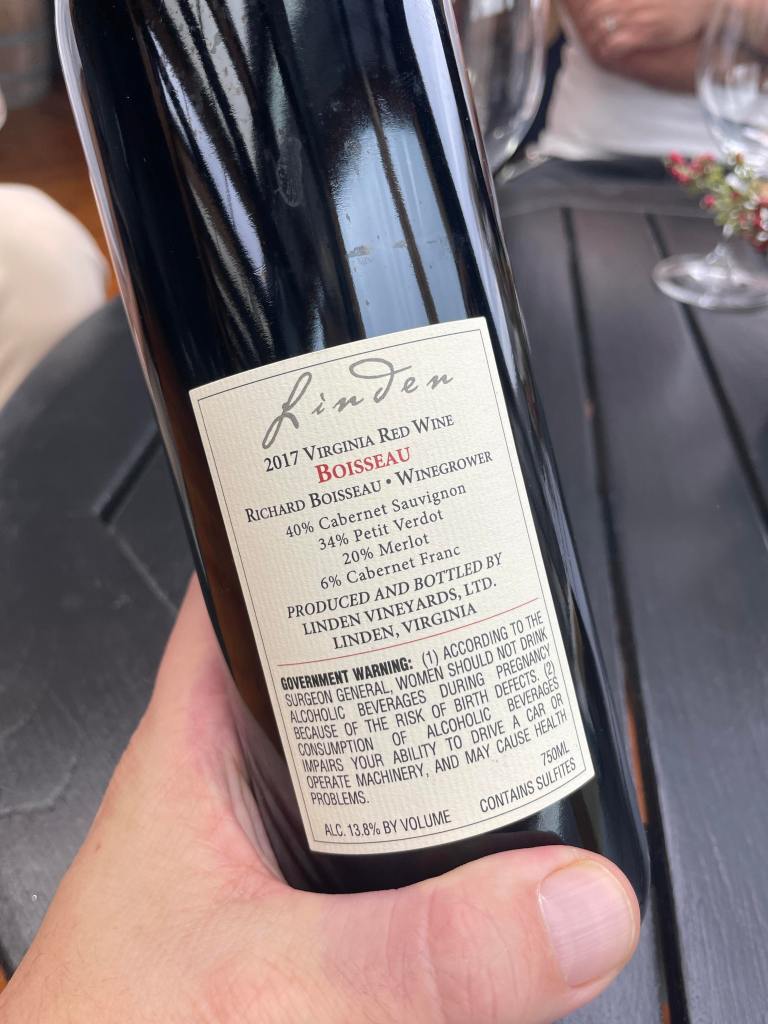
Whether standing on its own or acting as a supporting player in a blend, Virginia Petit Verdot makes its presence known. It provides a gorgeous backbone to softer varietals like Merlot (mmmmmm… Zora Chloe’s Dark Fruit) and Cabernet Sauvignon—particularly in Mount Alto’s wines, where powerful Petit Verdot tannins meet refined, velvety Cab Sauv in a way that makes me stop and say oh wow.
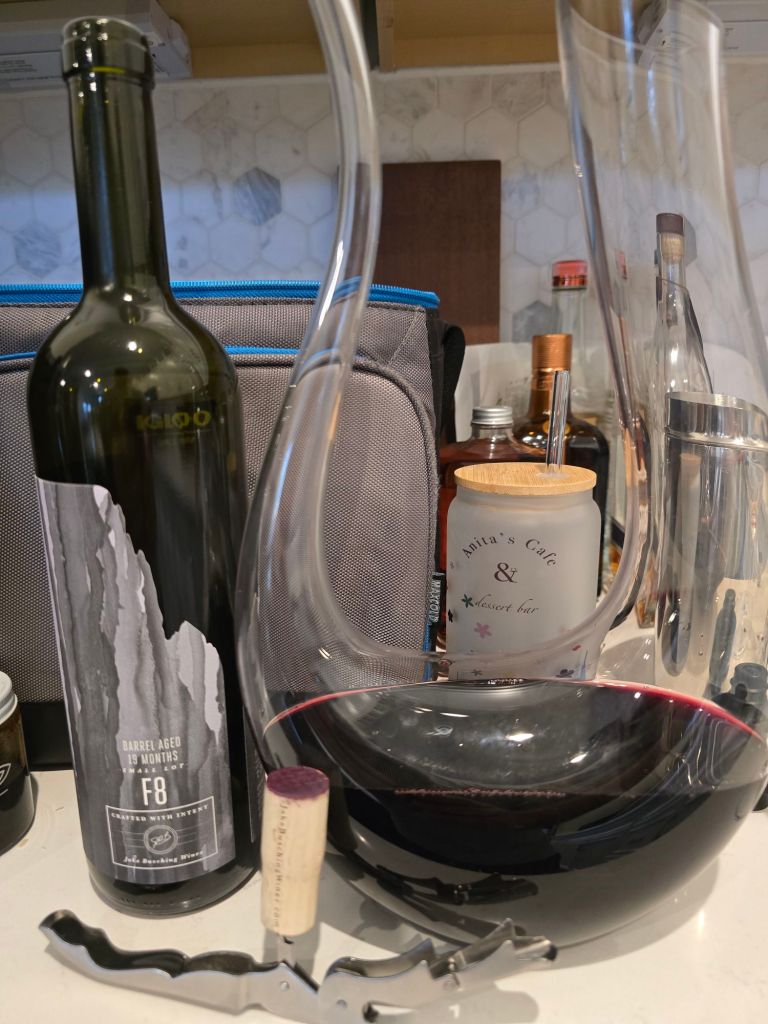
Even in the emerging world of 50/50 Tannat–Petit Verdot blends (Jake’s F8, Paradise Springs PVT, with more hitting the market—yay!), Petit Verdot often defines the wine, carrying the finish and providing structure that lingers long after the last sip. Based on what I’ve opened over the years, I suspect Petit Verdot as a blending component also contributes meaningfully to aging potential—the tannins holding everything together in harmony. I can’t help but wonder how often winemakers are thinking about that as they build their blends.

Virginia Petit Verdot on the Palate
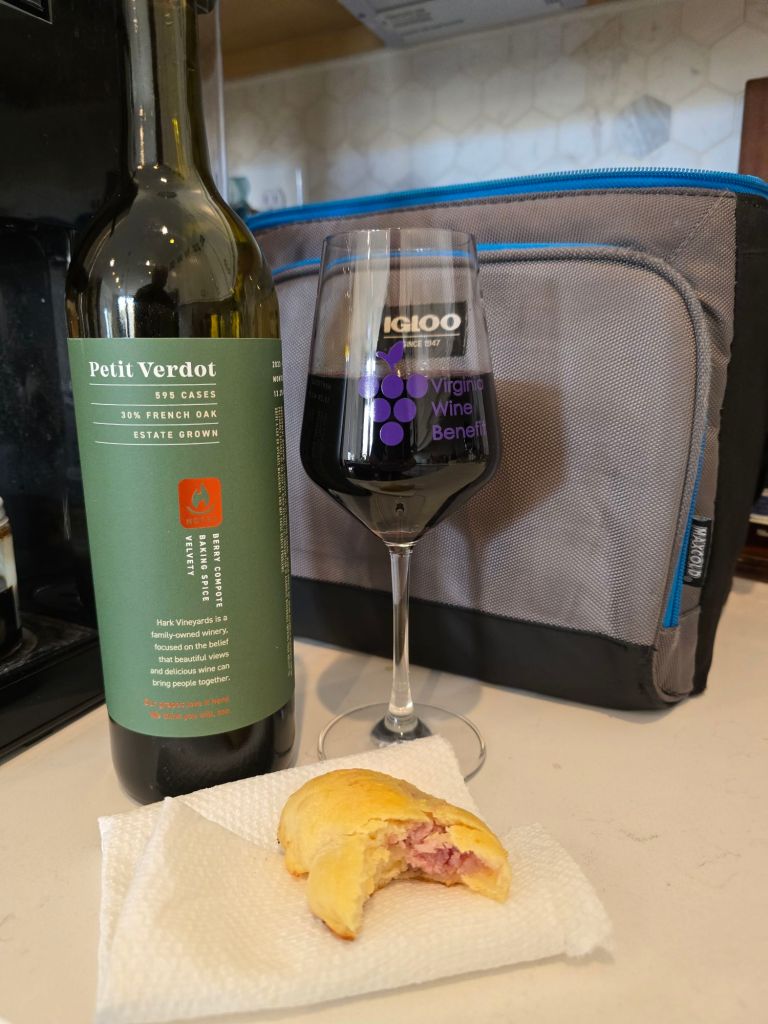
For me, Petit Verdot consistently brings flavors of plum and blackberry (I have a manifesto on tasting notes coming someday—watch for it), along with leather and tobacco when it wants to get serious. Sometimes winemakers lean heavily on oak to soften what can feel like assertive tannins, and while that style isn’t usually my preference, time often works its magic. As the oak integrates and fades into the background, the fruit can remain preserved longer than expected—and that can be incredibly rewarding.

Virginia Petit Verdot Lives Forever
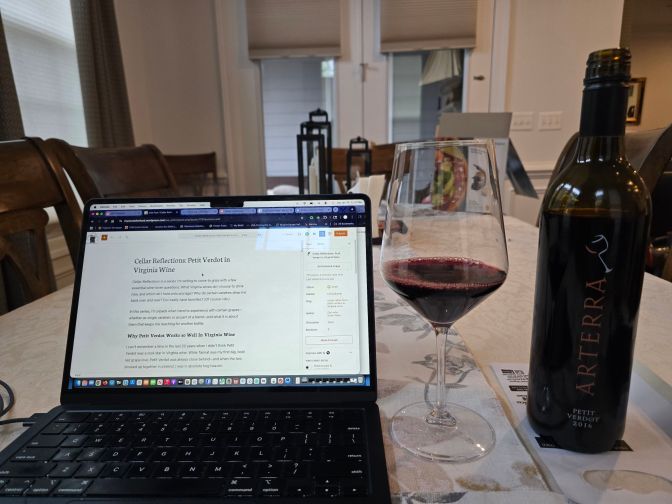
Even without oak, Petit Verdot feels nearly indestructible. I have bottles on my shelf going back to the 2012 vintage that I’m still waiting to open. Producers like Arterra seem to have truly unlocked this grape’s potential—delivering boldness, juicy fruit, and the ability to age with tremendous grace. I’m sipping a 2016 Arterra while finishing this post, and in the coming weeks I plan to share a 2017 with some beloved winemakers who grow Petit Verdot and blend it into their wines.
You will, at a minimum, hear about that on Instagram—and in future posts.
Trust me.
Do you love yourself a good Petit Verdot or Petit Verdot-heavy blend? What Petit Verdot do you gravitate toward when you seek depth and structure? Share your thoughts in the comments and list some great ones to check out!

 My NoVa Wine Blog
2 thoughts on “Cellar Reflections: Petit Verdot in Virginia Wine”