
Virginia wine continues to thrive, not just with better wine — also with braver wine. Growers and winemakers are exploring alternative grapes and, more importantly, collaborating to continually improve. For wine lovers, that means more distinctive, site-driven, ageworthy wines. Rejoice!
Virginia Nebbiolo is emerging as one of the most exciting developments in the Virginia wine industry. Not long ago you could count the wineries producing it on one hand. Nebbiolo is now being planted and produced by multiple Virginia wineries in various parts of the state. At the recent Virginia Nebbiolo Summit, winemakers gathered to evaluate whether this famously difficult Italian grape can truly thrive in Virginia’s climate.
The Virginia Nebbiolo Summit
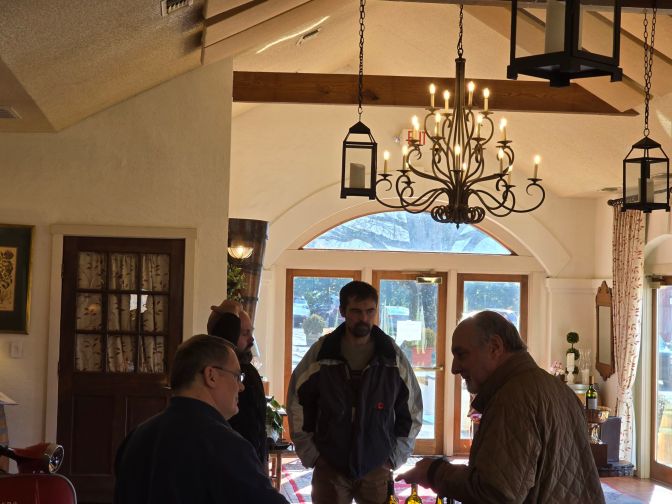
The Virginia Nebbiolo Summit — organized by Matt Fitzsimmons — brought together a group of winemakers who are either already producing Nebbiolo or have recently planted it. Hosted at Barboursville very generously by general manager Luca Paschina and winemaker Daniele Tessaro, the event was equal parts tasting, seminar, and strategy session.
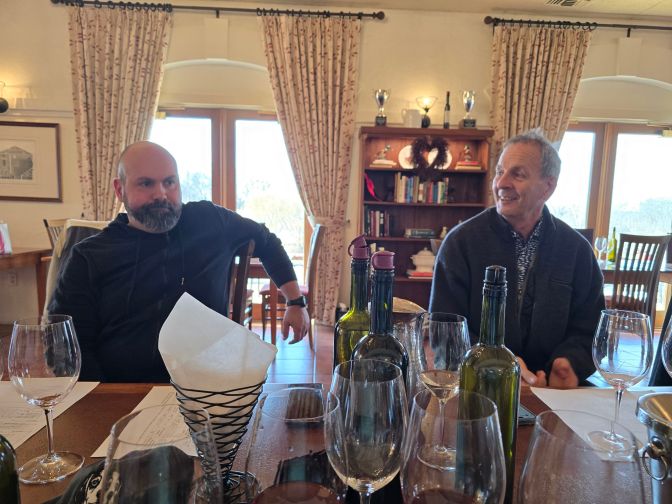
Guests included:
- Jeff White & Nick Driskill — Glen Manor Vineyards
- Robert Muse — Muse Vineyards
- David Eiserman — Chestnut Oak Vineyard
- Benoit Pineau — Pollak Vineyards
- Bill Gadino — Gadino Cellars
- Shannon Horton — Horton Vineyards
- Matthieu Finot — King Family Vineyards
- Dave McIntyre – Wine writer and wine judge
- Frank Morgan – Wine writer and Director of Judging for the Virginia Governor’s Cup
- Kenny Bumbaco – Wine judge and industry expert
- Matt Fitzsimmons – that other Virginia wine blogger
Alongside wine writers and industry leaders, the room was filled with thoughtful people contemplating one big question:
Can Virginia become a legitimate home for Nebbiolo?
After this tasting, it’s hard not to think the answer is a resounding yes.
Why Nebbiolo? Why Now?
There are roughly 40 acres of Nebbiolo planted in Virginia – a tiny amount compared to widely grown and produced Cabernet Franc and Chardonnay. But more is being planted.
Barboursville has been making Nebbiolo since 1998, and Horton even brought a 1995 bottle to the summit. Now we have more producers diving in — many after conversations with Luca.
Jeff White put it plainly: he always loved Italian wine, but after meeting with Luca and visiting Piemonte, he believed his site could produce great Nebbiolo — he took a risk and planted it.
He was not wrong.
Several winemakers described Nebbiolo as a passion project. It’s not an easy grape. It breaks bud early and ripens late. It demands elevation above frost lines. It requires excellent drainage. It’s wildly vigorous in the vineyard and loses its very soul if overcropped.
And yet, that challenge is precisely the draw – meticulous farming yields an incredible wine.
Due to frost, Chestnut Oak has produced four vintages of Nebbiolo despite 11 years growing it. Frost remains bedeviling. As David Eiserman said during discussion:
“Nebbiolo will teach you how to grow grapes in Virginia.”
That might be the line of the day.
The Tasting: Five Flights, One Big Story
The structure of the tasting helped tell a larger narrative: comparison points, proof of concept, emerging excellence, stylistic variation, and ageworthiness.
Flight 1 – Setting the Benchmark
Italian examples provided stylistic guardrails, alongside a Pennsylvania outlier:
The Langhe showed youthful fruit and tannic promise. The Barbaresco was more structured and tight. The consensus around the Pennsylvania bottle was that it felt prematurely aged.
The point wasn’t to crown a winner — the Italian wines calibrated our palates. What does Nebbiolo look like when it behaves as expected? Thus we entered our exploration of Virginia Nebbiolo with a solid reference point.
Flight 2 – Barboursville: The Standard Bearer
- 2007 Barboursville Nebbiolo Reserve
- 2023 Barboursville Nebbiolo Reserve (unreleased)
- 2023 Barboursville Nebbiolo Goodlow Mountain (not yet bottled)
- 2023 Chestnut Oak Nebbiolo
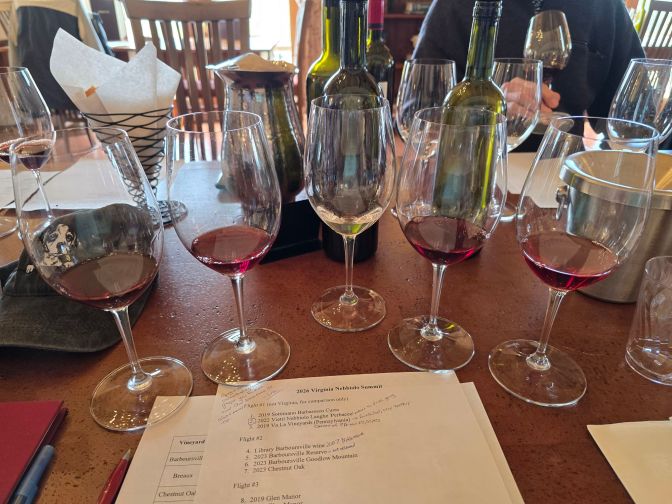
The 2007 library wine was the mic drop. Nineteen years since harvest and vibrant — clear fruit, refined tannins, remarkable freshness. If anyone has the nerve to question whether Virginia Nebbiolo can age, that bottle answered decisively.
The 2023s were powerful and tannic but beautifully structured. The reserve sample was beautiful and well-rounded, and the Goodlow sample, still years from release, had a color and spice profile that kept pulling me back in. I took my time with it and was incredibly sad when flight two began and I had to dump the remainder.
Chestnut Oak’s 2023 showed a lighter, airier style — less power, more approachability. No food pairings required with this sipper. As a perfect snowstorm Netflix binge Nebbiolo this would be great, no chill required.
Flight 3 – Coming Soon
- 2019 Glen Manor
- 2023 Glen Manor (unreleased)
- 2023 Muse
- 2023 Pollak (unreleased)
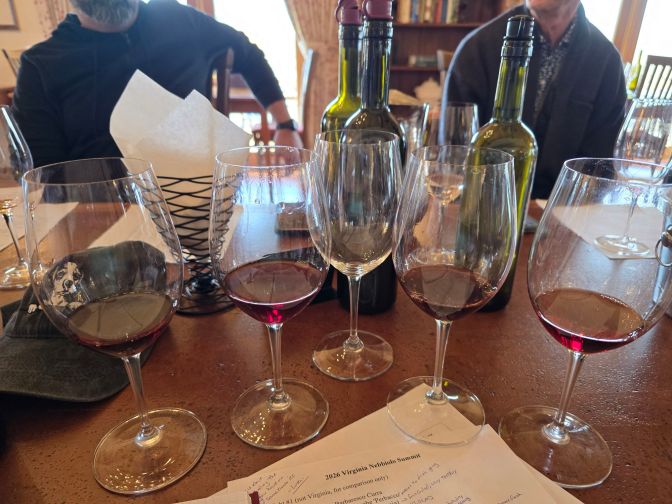
Glen Manor’s first vintage held its own, tannic but drinking well. The 2023 was harmonious and joyful — Jeff’s thoughtful canopy management to provide shade and protect aromatics clearly paid off.
Pollak’s first Nebbiolo continues to impress me. It’s remarkable how confident Benoit’s inaugural effort feels. Production is small — word is one bottle per customer — and I’ll be in line. Many times.
Muse showed heavy oak and likely needs time to integrate and/or decanting.
Main idea: these producers aren’t dabbling. They’re serious about Nebbiolo in Virginia.
Flight 4 – Time and Blending
- 2014 & 2019 Horton
- 2014 & 2021 Gadino
This flight looked at stylistic differences and blending decisions. Horton’s 2014 (100% Nebbiolo) was my favorite — elegant and resolved. The 2019 incorporated Tinta Cão, Cabernet Franc, and Mourvèdre.
Gadino’s 2014 included Petit Verdot (of course I loved it), while the 2021 felt young but promising.
Nebbiolo in Virginia is not monolithic. And that’s a strength.
Flight 5 – Wrapping Up with a Surprise
- 2019 Breaux
- 2020 Chrysalis
- 2023 Gabrielle Rausse
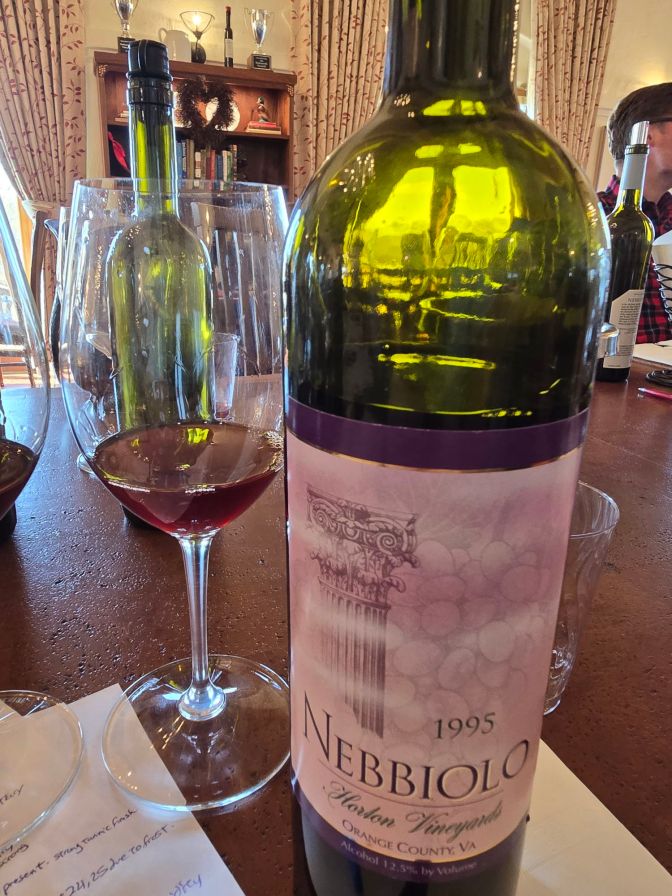
- 1995 Horton (surprise bottle)
The 1995 Horton was a fascinating closer — still tannic at 31 years old, brown at the rim but structurally intact, characteristic of the variety, and charming. A reminder that this grape is built for patience.
The Gabrielle Rausse blend (with 20% Merlot) was fruit-forward and refreshing — not classic in the way so many other wines today were, but enjoyable. I did score the leftovers to bring home.
Not every bottle in this flight matched the profile established in flight one. But that’s part of experimentation.
The Big Takeaways
1. What Does Virginia Nebbiolo Taste Like?
College Dan probably would not enjoy the refined nature of Nebbiolo, seeking either sweeter or less thought-provoking wine. The ones I really loved: Pollak, Glen Manor, Barboursville and Chestnut Oak. Current Dan is in love with these gorgeous characteristics:
- Wonderful, high acidity
- Firm and refined tannins
- Often rose petal and tar aromatics with some fruit aromas
- Red cherry hitting the palate, often vibrantly
- Ageworthy structure – it’s built to last
2. Site Is Everything
Elevation, drainage, canopy management for disease control and shade, crop control — Nebbiolo demands intention. It is not forgiving. Several winemakers lost the 2025 crop due to frost after bud break. This grape is not for the faint of heart.
3. Phenolic Ripeness Over Numbers
Luca and Daniele focus less on Brix and pH, more on smell, taste, and texture. Harvest decisions are sensory, not spreadsheet-driven. Many of my favorite Virginia wines are made by relying less on the numbers and more on sensory experience in the vineyard.
4. This Is a Movement, Not a Moment
Luca told us that Barboursville has customers who visit just for Nebbiolo. That’s significant.
While grapes like Cabernet Sauvignon and Merlot have traveled the globe, Nebbiolo has remained stubbornly rooted in Piemonte. Outside of small West Coast plantings and Virginia’s modest acreage, it hasn’t truly taken hold.
But maybe in Virginia things will be different.
And After the Summit…
After the formal tasting, conversations continued. I headed to the library with Matt and Kenny and ordered a glass of the 2017 Barboursville Nebbiolo Reserve. With a few years of age, it showed depth and refinement that absolutely knocked my socks off.
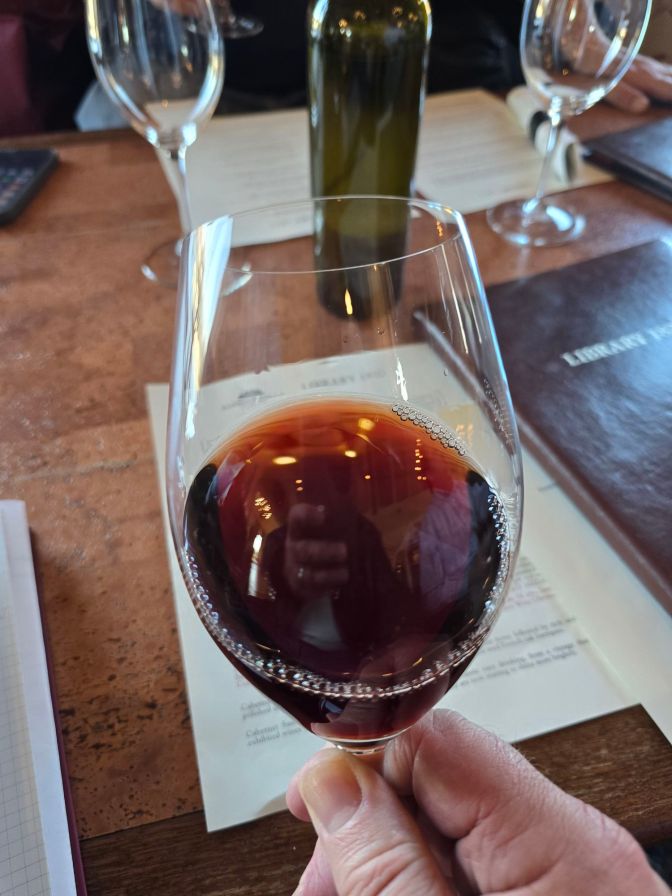
A bottle came home with me. There was no question.
Final Thoughts
Nebbiolo in Virginia is no longer a curiosity. It is a serious, collaborative effort among thoughtful winemakers willing to take risks. Upcoming releases from Glen Manor and Pollak will be showstoppers and tried and true library wines from Barboursville, Gadino and Horton continue to impress.
It is difficult. It is site-driven. It requires thoughtful management. It is ageworthy.
And when done well, it will steal your heart.
If you haven’t explored Virginia Nebbiolo yet, start tasting. Now is the time.

 My NoVa Wine Blog
Great timing on this one! Thanks to my daughter, we were just able to try Barboursville’s 2002 Nebbiolo! We were both amazed at the level of tannins it still possessed after this much time. The first night I thought that the fruit had disappeared a little bit (Selah disagreed and she has a better palette) but the next night I felt like it really expressed itself well – I felt like I tasted more fruit and thought it was really good. Enjoyed this read!
LikeLiked by 1 person
oh wow on the 2002! I bet that was GREAT!
Thanks for the feedback and comment! Go grab some more good Va Nebb!
LikeLike