
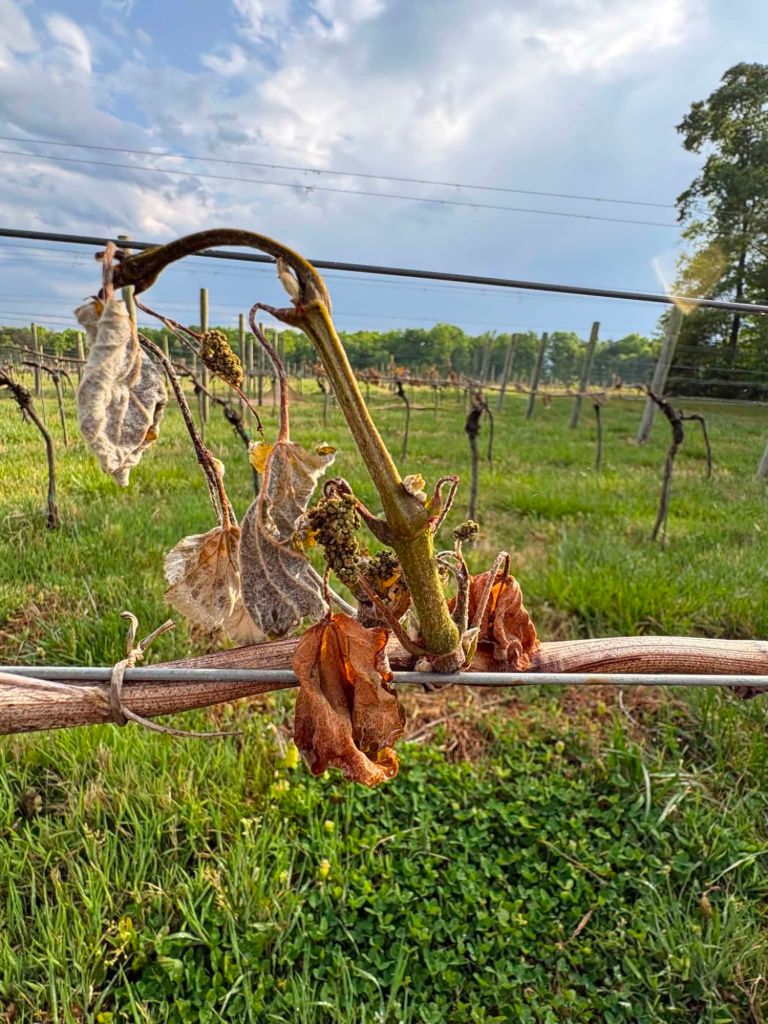
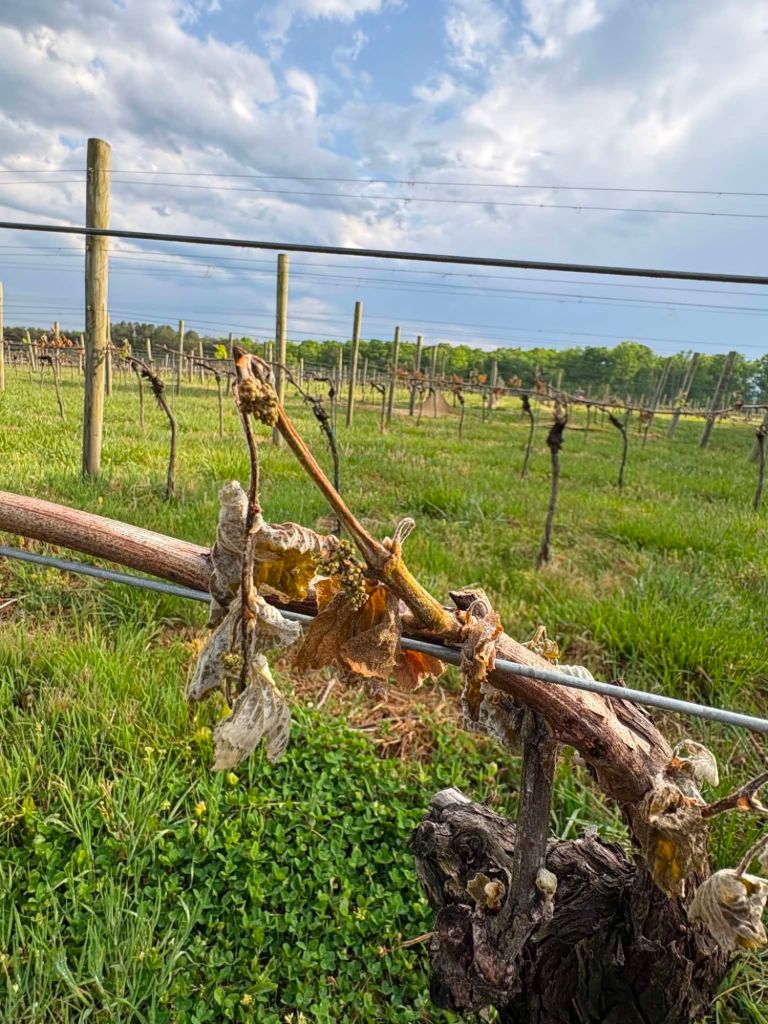
Mother Nature rules when it comes to agriculture, and that truth is never more poignant than in a Virginia vineyard. Over the past decade, climate change has amplified the “high-stakes” nature of winemaking here. From the 2018 harvest deluges to the 2020 Mother’s Day frost, the hits keep coming. Now, the April 21, 2026 deep freeze has crushed primary shoots that—thanks to an unusually warm spring—broke bud far too early.
Early estimates suggest losses between 50% and 100% of the crop for many growers. While some sites escaped unscathed, others face a total loss. I reached out to several winegrowers to understand the science of this event, how they prepared, and why April 21st was so uniquely devastating.
The Science of the Struggle
To understand these losses (and what made it through), we have to understand two things: Timing and Topography.
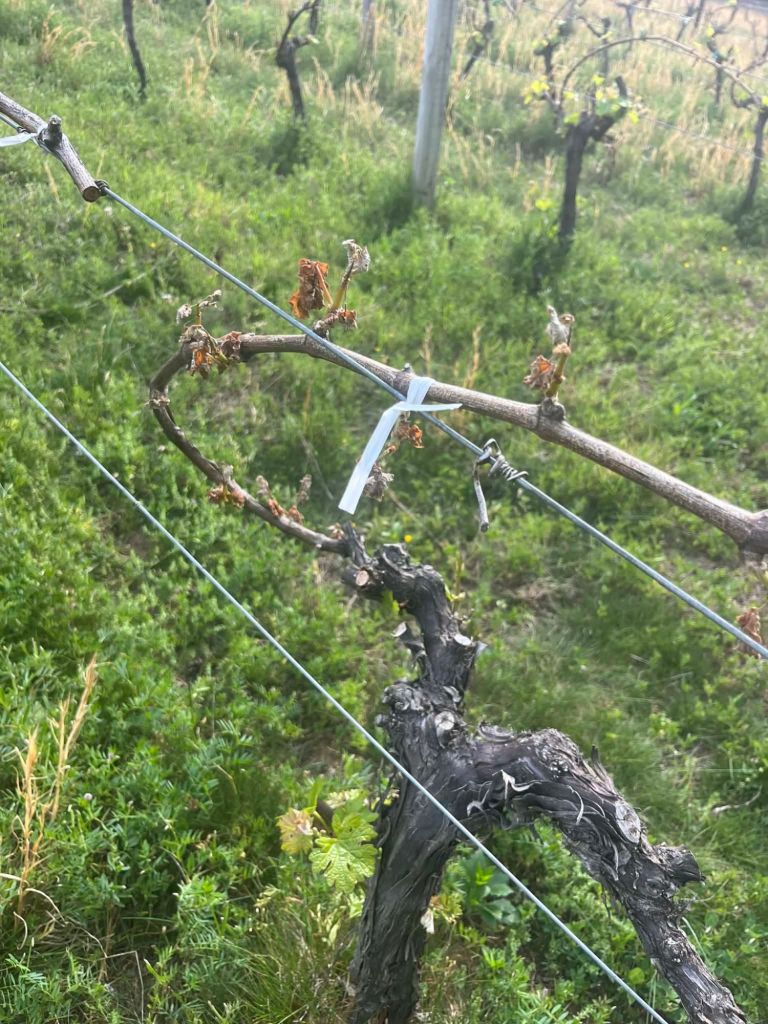
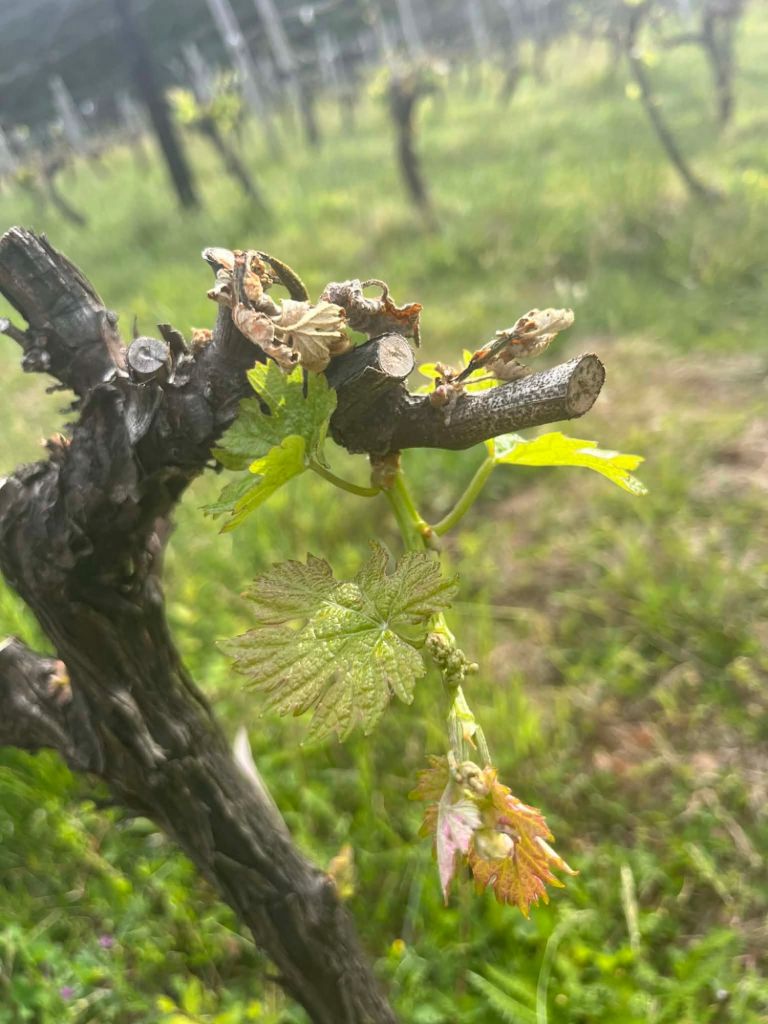
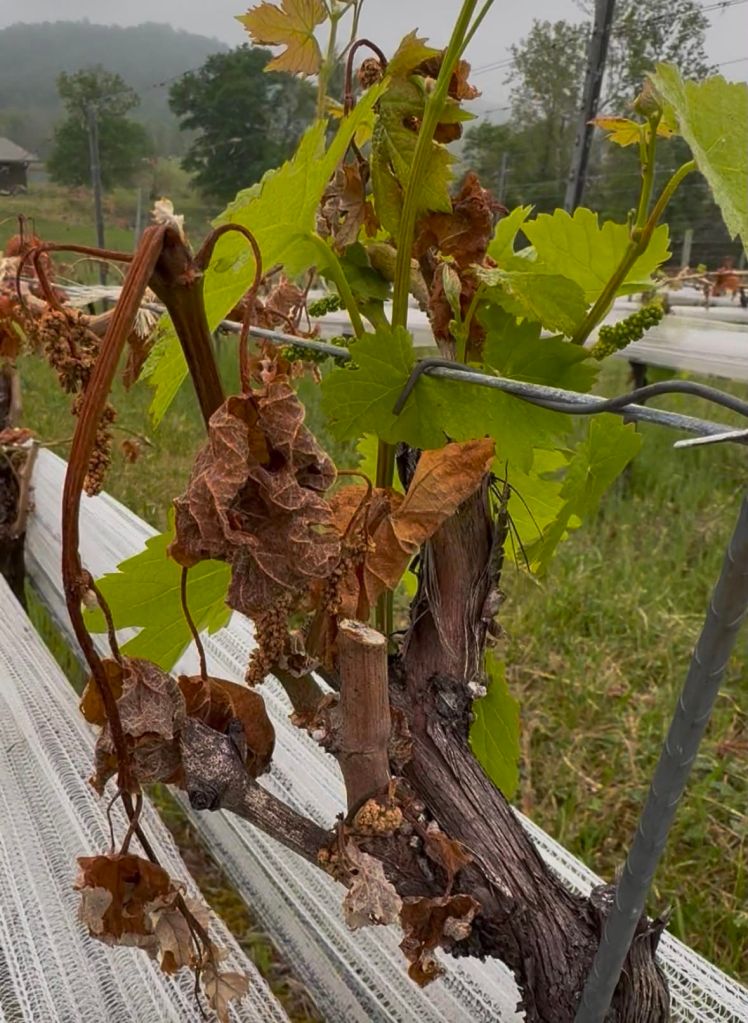
- The Shift: We are seeing more frequent temperature swings—Januarys in the 70s followed by snowstorms. This causes “early budbreak.” These young shoots are full of sap and moisture; when that moisture freezes, it tears plant cell membranes and dehydrates the shoot, leaving the vineyard a sea of brown.
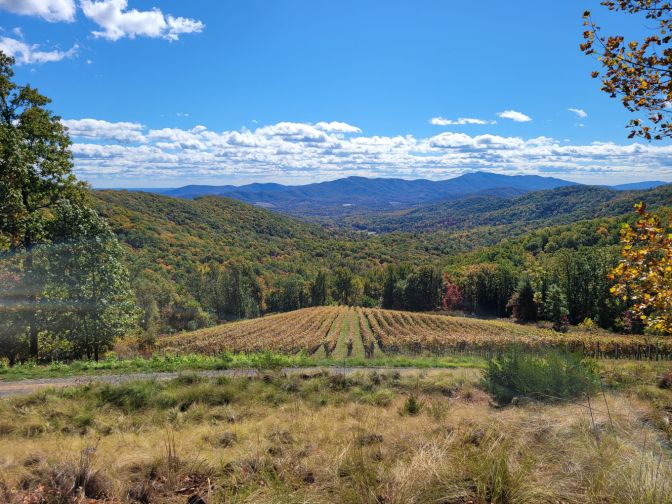
- The Inversion: In Virginia, a “good site” usually relies on thermal inversion. Cold air is heavy and sinks into valleys, while warmer air rises. Growers look for a “frost line” on their slopes where the vines stay just warm enough to survive a frost event. Possibly one of the best examples of this feature is Ankida Ridge, where at 1800 feet above sea level opening into a vast valley below, the cold air simply sinks away, and their vines were unscathed, with temps not going under 34 degrees on April 21st.
Voices from the Vineyard
Jason Murray | Arterra Wines
For Jason, a good site is the primary defense. Arterra’s Crooked Run Estate sits on a fantastic slope that allows cold air to settle into the valley below. Most of his vines sit above the frost line, but this freeze was so deep that even the “safe” zones were tested.
- The Damage: Tannat (which had broken bud) suffered heavy losses at the lowest points. A good portion of Roussanne, which hadn’t pushed yet, survived. Petit Verdot (my favorite bulletproof variety) seems to have had minimal damage, and Albariño had mild impacts. A major concern is that this means a second year in a row of much lower yields, given weather and drought conditions. Vine health must be monitored!
- The Outlook: Between recent droughts and Spotted Lanternfly pressure, this marks the third year of reduced harvests. Jason is now re-thinking inventory management and long-term planning for a changing climate. He’s also closely monitoring vine health given three very tough years.
Jason’s quote that really brings home the impact of climate change: “Wearing shorts and t-shirts in March and April is not a good thing. [When that happens] agriculture is gonna struggle.”
AJ Greely | Hark Vineyards
Budbreak wasn’t as early here as in 2024 and 2025, but it was still too early. AJ and her team spent the cold nights on “frostwatch,” monitoring temperatures until they dropped below 33°F, then firing up propane wind machines to pull warmer air down to the vines. They rely on creating their own inversion in the vineyard to protect the grapes, and this generally works until we get under 27 degrees – and on April 21, we went well below that.
- The Strategy: Despite the long nights, AJ is looking toward mitigation like KDL spray (which raises phosphorus and sugar in shoots to lower their freezing point) and delaying pruning to “stall” the vines and buy more time before budbreak.
- The Voice of the VVA: As President of the Virginia Vineyards Association, AJ is gathering data from across the state and sharing innovative and effective strategies. Her message to us? “Order and Drink Virginia wine. If you don’t see it on the shelf, ask the sommelier or shop owner why.”
Robert Burgholzer | Mount Alto Vineyards
Mount Alto takes an “embrace the uncertainty” approach. They monitor temperatures remotely, texting through the night as the mercury drops. At the end of the evening, the messages sound something like, “We will manage this too.” They remain optomistic with only the lowest four rows of their vineyard being a total loss, and resilience higher up in the vineyard.
- The Narrow Margin: Robert noted that if budbreak had occurred just four days later, they would have been safe. While the highest rows were unscathed, the bottom four rows—where the cold air pooled—were a total loss. They have implemented pruning strategies to encourage later budbreak – while labor intensive, these strategies carried them through this event.
- The “Bottle Gap”: Because wine takes time to age, the low yields of 2026 won’t fully hit the shelves until 2028. Robert is focusing on current sales now to ensure the winery has the liquidity to survive the lean times that will come.
Jake Busching | Consultant & Winemaker
Jake notes that while vines can often protect themselves as low as 28°F, there is no effective mitigation for the low 20s. Helicopters can create an effective enough inversion, but they’ll run out of fuel before it warms up enough to leave when it’s this cold. “You don’t know if you’re free and clear until the sun comes up and starts to warm us. I’ve had frost happen right at sunrise when the wind drops.“ And thus, he keeps good bourbon handy on nights like this.
- The Elevation Factor: Jake is seeing significant damage in vines planted below 850 feet. Above that, the temperatures generally held better.
- The Timeline: Jake observes that early-budding varieties like Chardonnay and Nebbiolo are pushing in March now. This “drags” the rest of the vineyard (like Cabernet Sauvignon) into the danger zone earlier than ever before.
Chelsey Blevins | 53rd Winery
Chelsey conducted one of the most interesting experiments of the year: Burlap. During a previous frost, she covered shoots with burlap and found they stayed two degrees warmer. They removed the burlap to keep it dry and reusable, unfortunately just before the freeze. But it was too cold on April 21 for two degrees to matter.
- The Reality: She described driving into the estate vineyard the day as being met with a “sea of brown.” Total loss for Albariño, significant damage to Chardonel, Vidal Blanc, and Chambourcin.
- Simmons Gap Hope: Their other site lost Chardonnay and had heavy damage with Viognier and Cabernet Franc, but higher plantings like Petit Verdot, Merlot and Cabernet Sauvignon survived.
- Pivot Points: Chelsey is now considering thinning trees around the estate vineyard to improve airflow and using irrigation to “ice” the shoots (a technique where a coating of ice can actually insulate the plant from the worst cold).
The Resilience of Virginia Wine
What stands out most isn’t the loss, but the grit of the growers and makers. These makers are already planning for the next season—shifting pruning techniques, replanting hardier varieties, and contemplating ways to make the best possible wine from what they will harvest and possibly from “secondary fruit.” The willingness to persevere and innovate in the quest for beauty and elegance in the face of adversity serves as an example to us all.
How you can help: The best way to support these folks is simple: Buy the wine. Visit a tasting room this weekend, grab a glass, and take a few bottles home. The people of Virginia Wine move mountains to bring these vintages to your table—let’s make sure we’re there for them when the mountain pushes back. In AJ Greely’s words: “Always, the best way for Virginia Wine Lovers to support us is to come and visit, hang out, drink some wine, take some wine home! If you’re in a local wine shop or restaurant, buy the Virginia Wine that’s on the shelf or on the wine list (this encourages the owners/somms to keep buying our wines). AND, if you don’t see Virginia wines on the shelf or list, ask why! Encourage them to buy Virginia Wine!!!!” Amen to that!
Special thanks to Chelsey Blevins, AJ Greely, Robert Burgholzer, Jake Busching, and Jason Murray for answering all my questions, and to Chelsey and Robert for sending the pictures from “The Day After.” Cover photo is from Chelsey at the 53rd estate vineyard. One of the things I love the most about Virginia Wine is that the winemakers are happy to share their time, insights, and expertise with a novice winelover like me who just wants to understand what’s happening as they grow the grapes and make the wine. These are the best people on the planet.


One thought on “The April 21 Gut Punch: An Overnight Freeze and What It Means for Virginia Wine”