
I first learned of Robbie Corpora’s work through my friends at Mount Alto. They had purchased some of that amazing Merlot he was growing at Mount Juliet Farm (Grace Estate Winery). Robbie has deep connections across the Monticello AVA and is involved in a number of notable projects. When I heard he was launching his own brand, I was eager to see his vision for his own wine brand firsthand. Robert at Mount Alto kindly connected us to plan a visit.
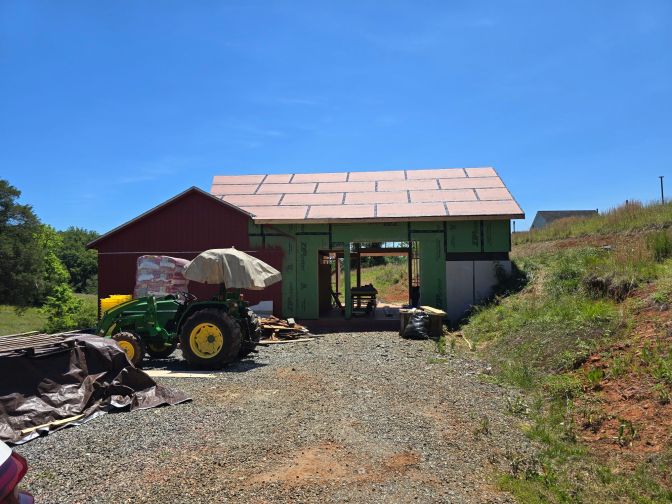
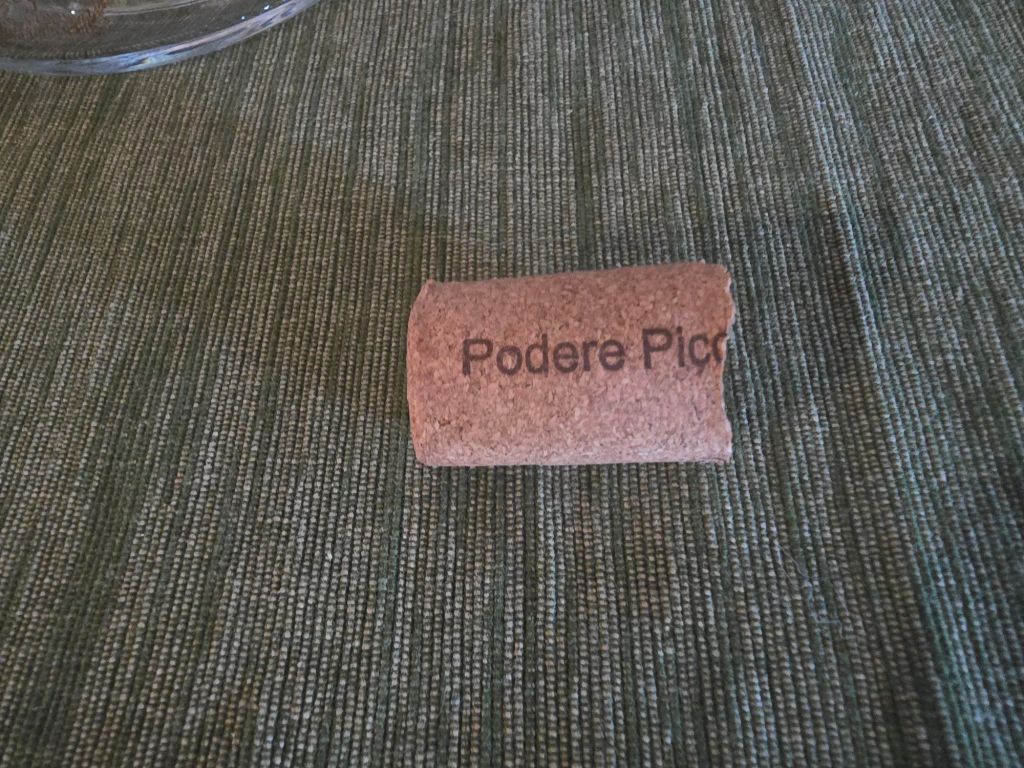
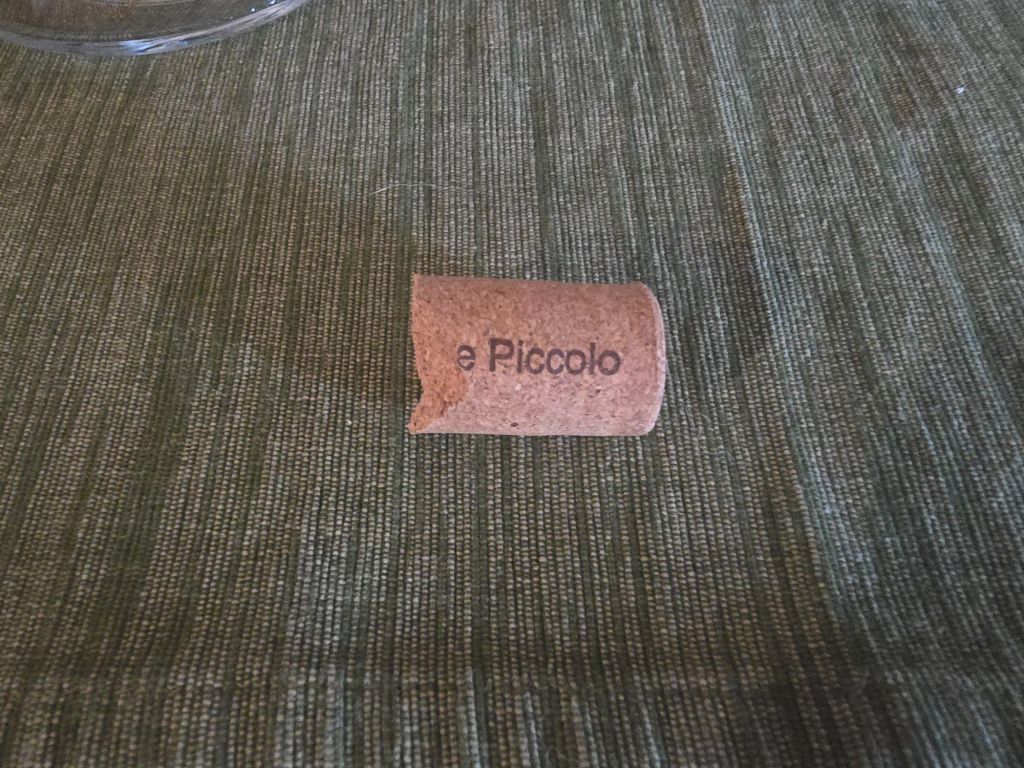
Podere Piccolo is Italian for “tiny farm,” and Piccolo also happens to be the name of one of the Corpora family’s dogs—making this, quite literally, Piccolo’s farm. This small-batch operation plans to grow, craft, and bottle estate wines from this very land.
Restoring History Off-the-Grid
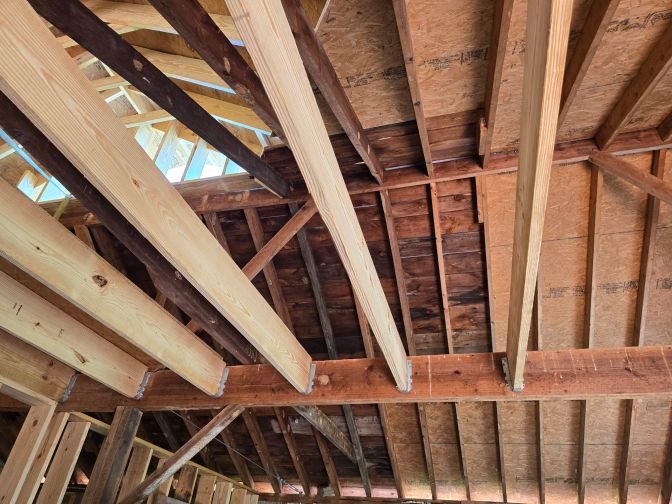
When I met Robbie, he was vacuuming sawdust from his ongoing work in the barn. He is doing the bulk of the restoration himself, occasionally drafting friends to help. Reviving a 100-year-old cattle barn is no small undertaking; it has required a serious roof replacement, shoring up the foundation to prevent water infiltration, and expanding the space to include a crush pad. Robbie is saving and reusing everything he can, including refinishing boards and using them for the floor. This winery is about place, sustainability, and expression.
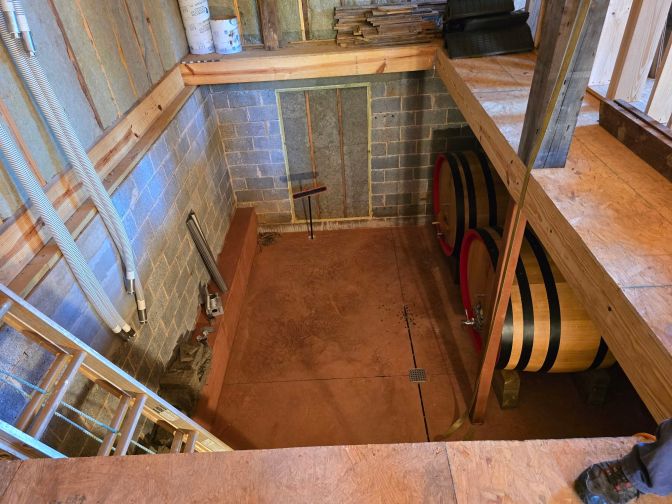
Once completed, the winery will operate via gravity flow rather than pumps to move fermented wine from the pad to the barrels. Embracing sustainability, Robbie designed the facility to run entirely off-grid once complete, utilizing solar panels on the roof paired with a dedicated battery storage room. The barn will also house his office and a small tasting space. While he doesn’t plan to open a commercial tasting room, he looks forward to hosting tastings by appointment in the future.
A Grower’s Perspective
Robbie approaches winemaking with the eyes of a grower. He cut his teeth in the vineyard back when his parents owned Afton Mountain Vineyards. Though occasionally pulled into the cellar to help, he always preferred tending the vines. This background clearly shapes his philosophy: the best wine is made in the vineyard, and heavy cellar intervention only distorts the natural flavors the site imparts to the grapes.
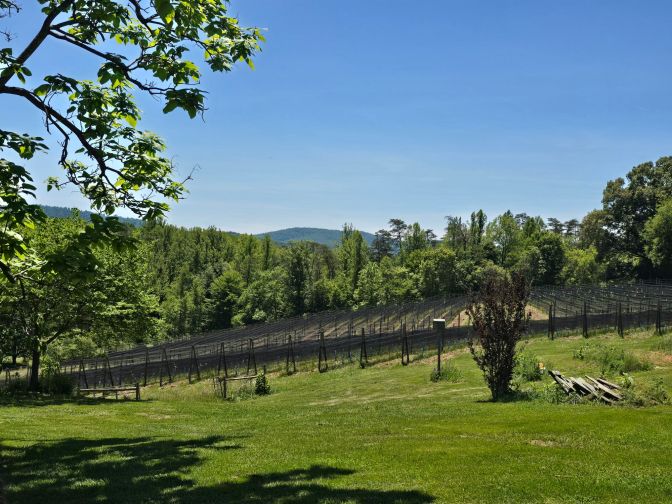
As we walked the property, Robbie pointed out the three acres of Cabernet Franc he planted in 2021. Unfortunately, severe spring frosts the past two years hit the young vines hard, meaning he has yet to harvest his first estate crop. To craft his initial vintages (2021–2024), he sourced fruit from Mount Juliet Farm, and for 2025 expanded to a private vineyard in Etlan, Virginia, at the base of Old Rag Mountain.
Robbie practices chemical-free farming—a philosophy mirrored in his work with Ramiiisol Vineyards. Because of this low-intervention approach, he expects a modest estate yield of one to two tons per acre. The site faces south-southeast for maximum sun exposure and is perfectly sloped for water evacuation. Robbie uses this specific phrase because it differs entirely from drainage (which concerns soil quality); evacuation is all about shedding rainfall quickly away from the vines.
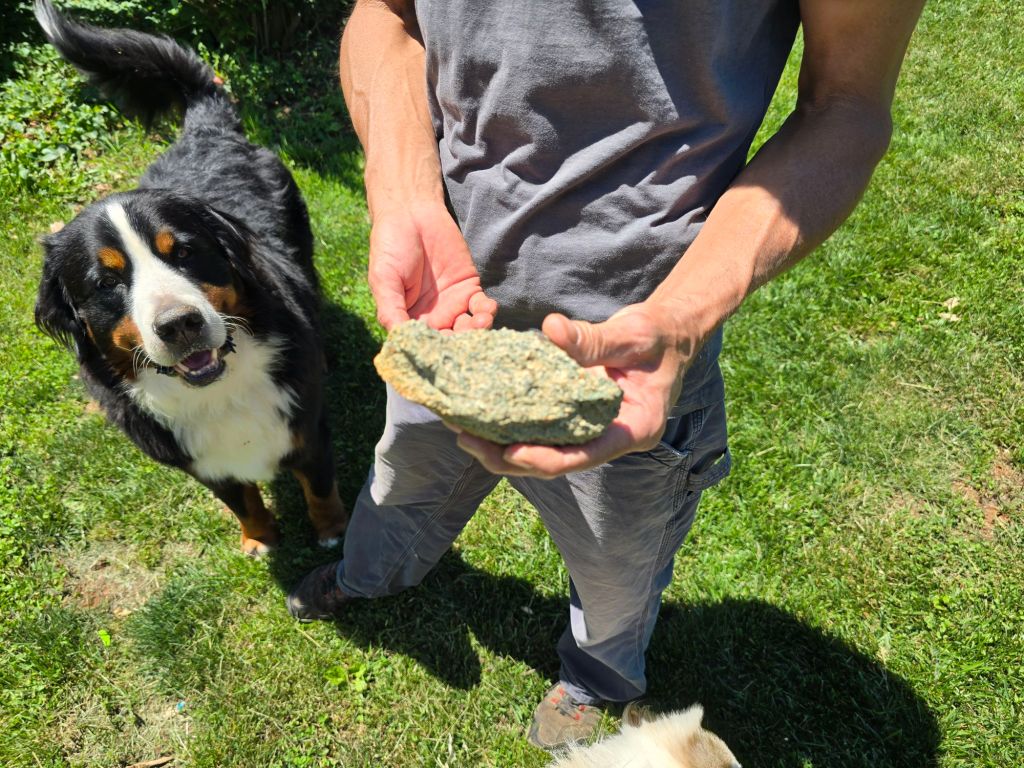
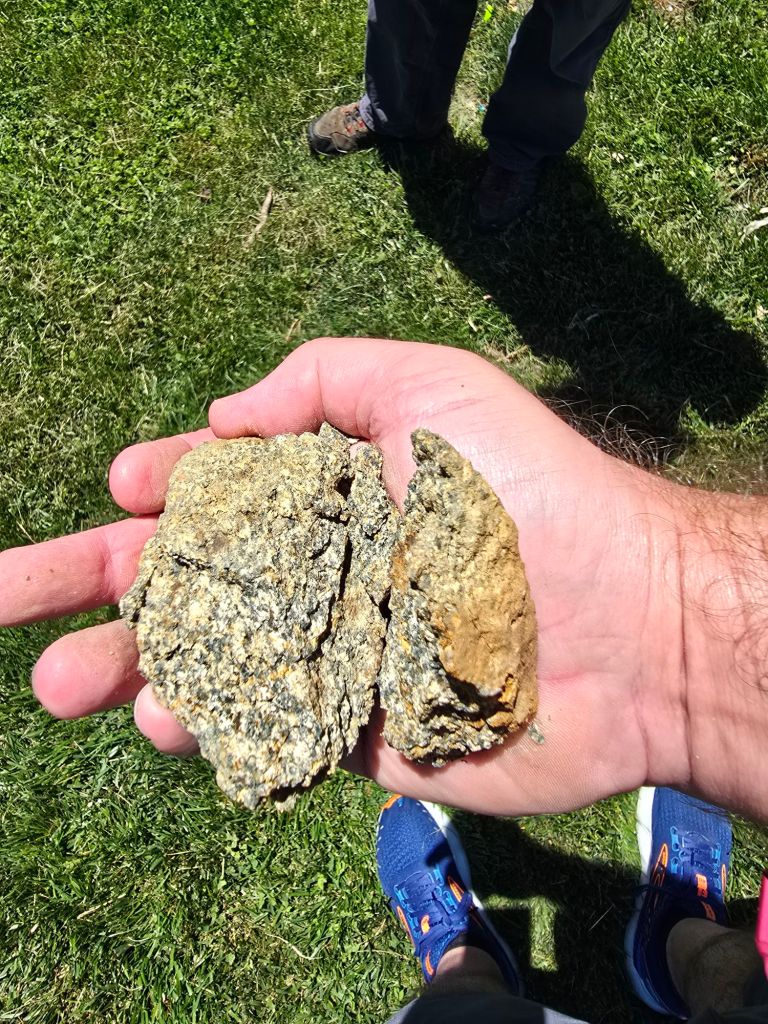
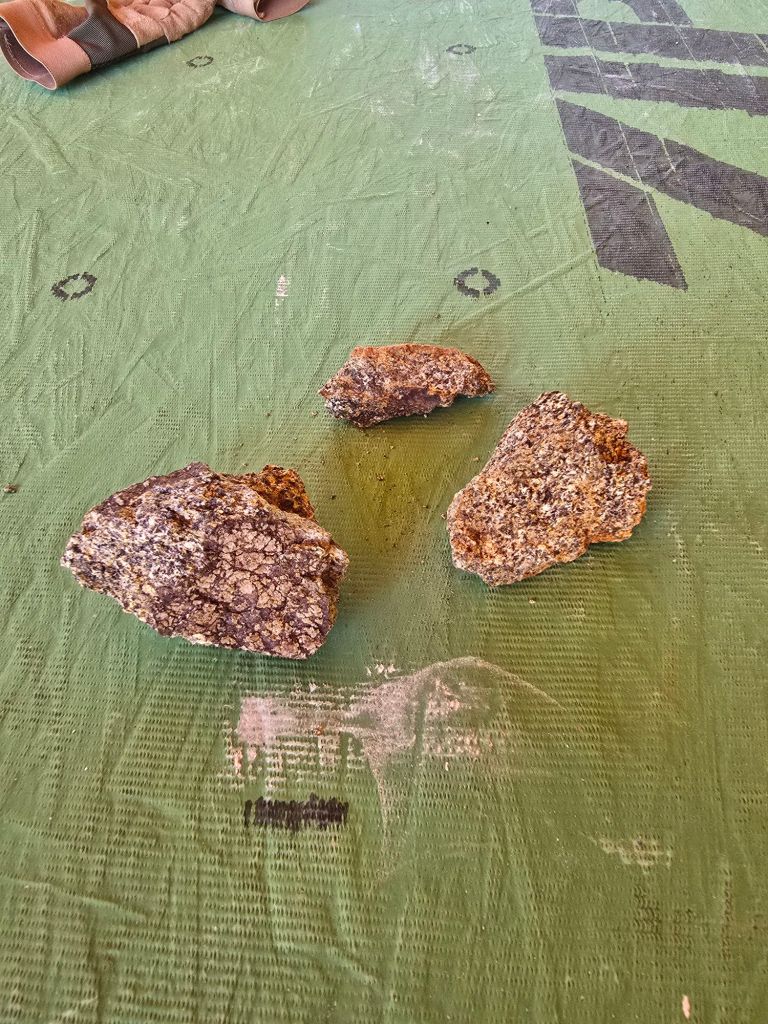
And then there is the soil: ultra-decayed gneiss. Robbie handed me a rock from the vineyard and asked me to break it. It easily cracked and crumbled into sand in my hands (while I used to bench press 110 pound dumbbells for lots of reps, that is not what made this happen – when they say decayed, they mean it). The vines will push their roots right into the rock and absorb nutrients. In a frost-free spring, this decomposing granite will yield exceptional grapes with striking minerality.
In the Barrel Room
Robbie’s resume includes working at Ramiiisol since 2014 and a five-year tenure at Grace Estate that wrapped up in October 2025. Establishing his personal label was always part of his five-year plan.
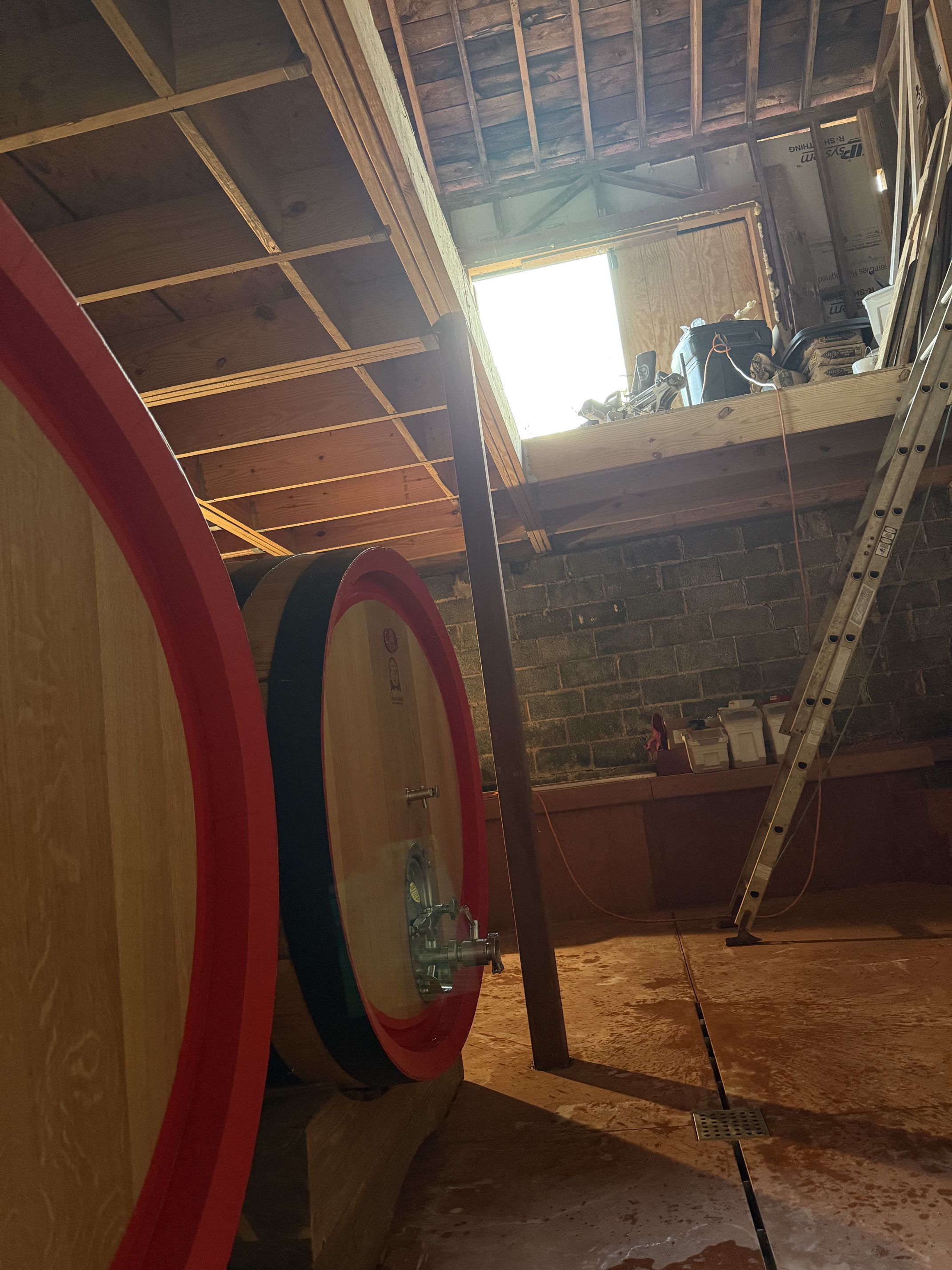
We sat down in the barrel room to taste. The cellar holds four massive, oval, new oak casks—three from Italy and one from Austria. These large vessels are chosen intentionally to reduce oak contact and slow down oxygenation. Upon their arrival, Robbie pre-treated them with saltwater to strip out harsh wood tannins. Furthermore, the wide, oval shape allows the lees to settle in a thin, extended film along the bottom, increasing wine-to-lees interaction, which boosts complexity and naturally protects the wine from oxidation.
The Cabernet Franc Vertical
Robbie currently has five vintages of Cabernet Franc aging, with the 2021 being his first official release. As someone who likes but generally does not love Cabernet Franc, you can genuinely trust me when I say these were shockingly good.
- 2021 (Mount Juliet Farm): Recently bottled but showing no signs of bottle shock. This five-year-old wine is fresh, lively, and dark, offering lovely fruit and a sense of earth without any of the aggressive green notes sometimes endemic to Virginia Cabernet Franc. Born from a drier year, it boasts beautiful depth and excellent aging potential.
- 2022 (Mount Juliet Farm): A cooler, rainier vintage yielded a wine that drinks remarkably like a Pinot Noir. Its lighter color and delicate intensity offered a completely different, yet thoroughly enjoyable experience. This and the ’21 are flawless examples of Virginia’s dramatic vintage variation. I adored this wine.
- 2023 (Mount Juliet Farm): Hailing from Virginia’s famously hot, dry vintage, this is a big, fruit-forward, muscular Cabernet Franc. It is the heaviest and earthiest of the lineup and feels primed for bottling. A true keeper that will wow you.
- 2024 (Mount Juliet Farm): Another hot, dry year that mirrors the weight and earthiness of the 2023, though with a dialed-back fruit profile.
- 2025 (Etlan Vineyard): Sourced from the unique, non-decomposing granite soils of Old Rag Mountain in Rappahannock County. It was in a bit of an awkward developmental phase right out of the barrel, but the funky nose blew off completely after a few minutes. It revealed beautiful fruit qualities and a distinct, stony granite minerality quite different from the Mount Juliet vintages.
Vitality Over Intervention
Robbie doesn’t believe in cellar fixes; his clean winemaking background has convinced him that a vigneron must weather the vintage variations alongside the wine. Sulfites are the only chemical used, and only to prevent oxidation. This hands-off approach—generally allowing time to iron out the nuances—is serving him beautifully.
He is chasing a sense of “vitality”—an energy beyond mere tasting notes and aromas that draws people back to the glass and fosters connections. It’s an appealing philosophy. Heavy manipulation and excessive oak can mask a wine’s soul, whereas low-intervention winemaking allows time and place to shine through clearly.
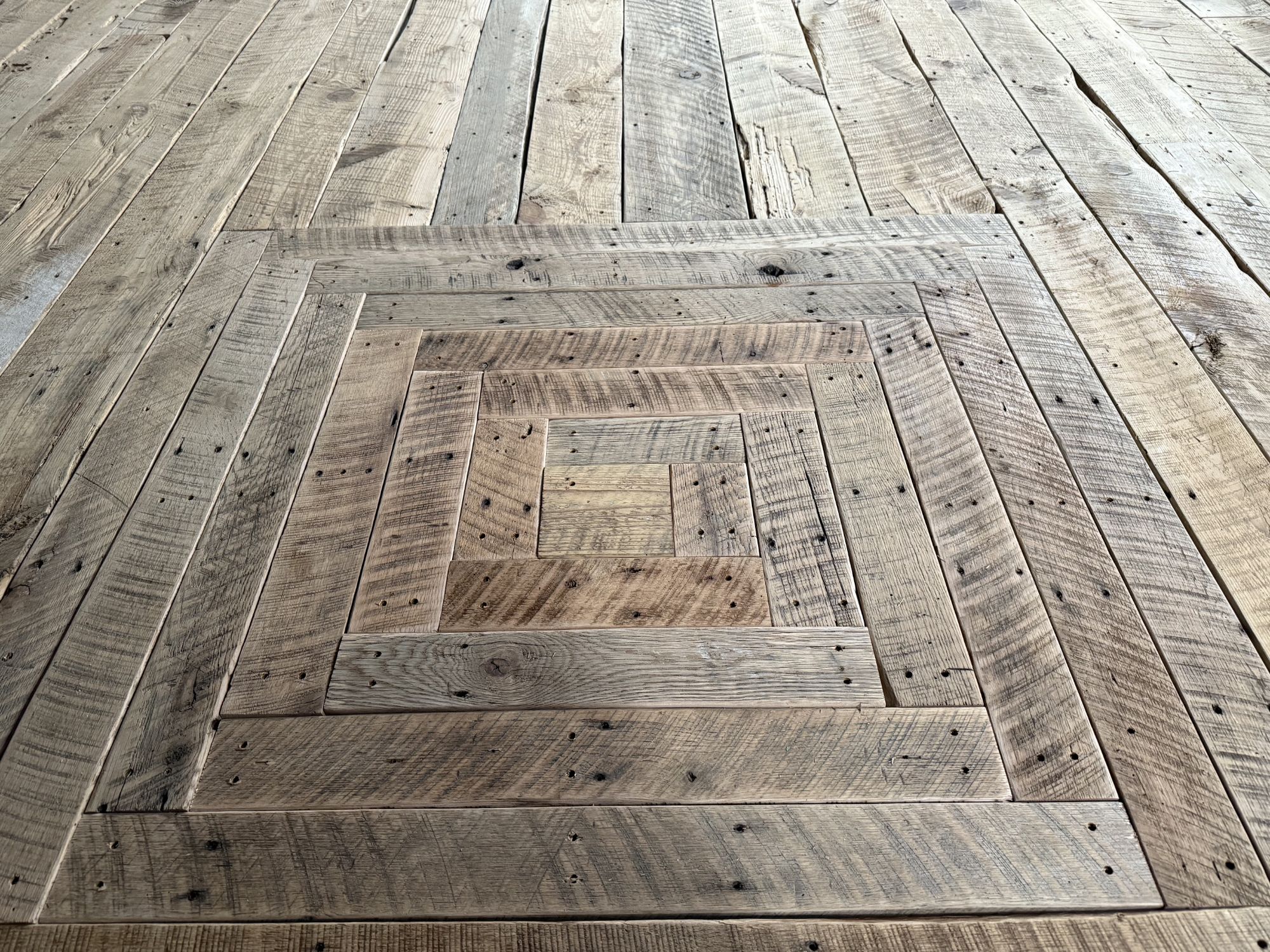
When he eventually opens his tasting space to the public by appointment, visitors will notice a unique detail: a sinistral (left-handed) spiral inset into the flooring. Robbie chose this because only two percent of snails spiral in this direction; because of their rare anatomy, they cannot mate with the majority, remaining beautifully unique.
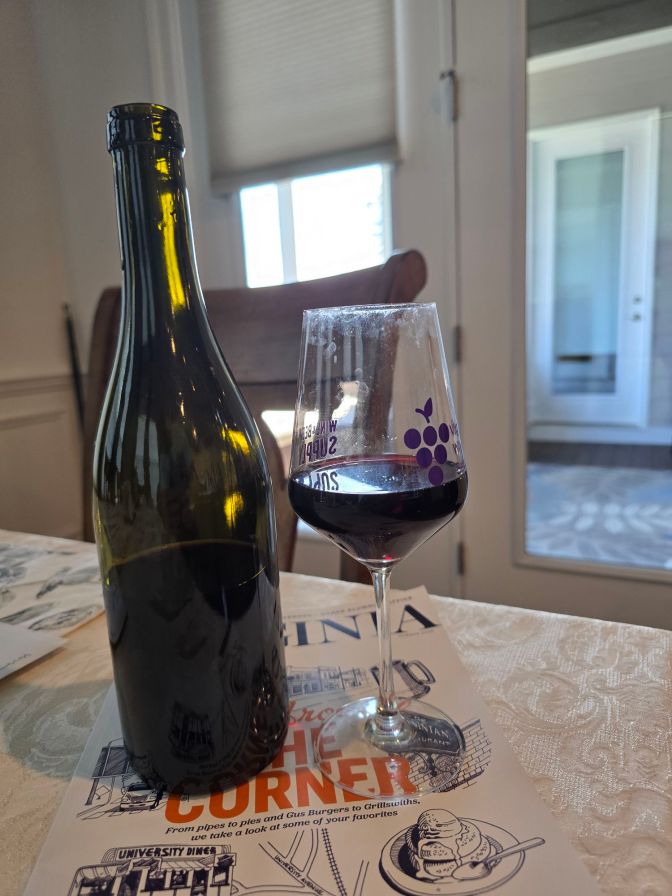
With such small production onsite, these wines will be equally rare. I am already preparing to stock up on the 2021 vintage once it is up for sale. Robbie let me take home the rest of the sample bottle we tasted from, and my husband—who generally doesn’t care much for wine—thoroughly enjoyed it.
Follow him on instagram to watch the completion of the winery construction, and get news on how to get on the mailing list. These bottles will disappear, so be sure not to miss out! Robbie is making Cabernet Franc that is a unique and exceptional expression of vineyard and growing season – wines with soul and vitality.
Keep your eyes on Robbie Corpora and Podere Piccolo!


super nice write-up…looking forward to tasting these wines, Robbie!!
LikeLiked by 1 person