
Are you expecting a soaring epic of 18th century English Literature. This blog is centered on modern American blogging with a heavy dose of wine. Sorry!
Here we are in our fourth consecutive vintage of extreme drought. It’s not really that long ago that everyone was complaining about Virginia rains and impact on wine quality and we all remember that 2018 was the season of prolonged rains. That year saw an average of 60 inches of rainfall, in a region where it was typically around 40 inches. There was no significant dry spell that allowed soils to dry out during the growing season, and fruit was very diluted, with many wineries producing no reds and muted white wines, with lots of rose. There were fun experiments too. Exceptions include Arterra and Mount Alto, whose sites and practices in 2018 allowed them to produce really good wines. Remember the year of Rosé?
What Does it Mean that We’ve had Four Years of Drought in Wine Country?
Wine grapes need to struggle to concentrate flavors and make amazing wines. Having native plants compete with the roots for water and nutrients is the conventional wisdom. But the prolonged struggle, compounded by cold damage from this spring’s late freeze, is well beyond struggle and now we’re looking at significant replantings and changes to business strategy. One has to pause and wonder whether the appearance of longtime family wineries on the market is tied to the challenges leading up to and including the freeze, and a loss of appetite for perpetual uncertainty in one’s livelihood.
Jim Law at Linden writes a lot about how weather and climate change have impacted Linden’s farming practices over time. Over the years he has documented earlier budbreak and earlier harvest, and in some years those lead to real challenges with wine quality – this year very uneven ripening will lead to some tough decisions (although we all benefit when there is a lot of Claret available!). Winegrowers everywhere are dealing with the drought and the impact of this year’s weather challenges with reduced harvest, uneven ripening, and uncertain futures.
A recent spate of moderate to heavy and sustained rain has shifted our drought map considerably. Two weeks ago, the map looked more like this:
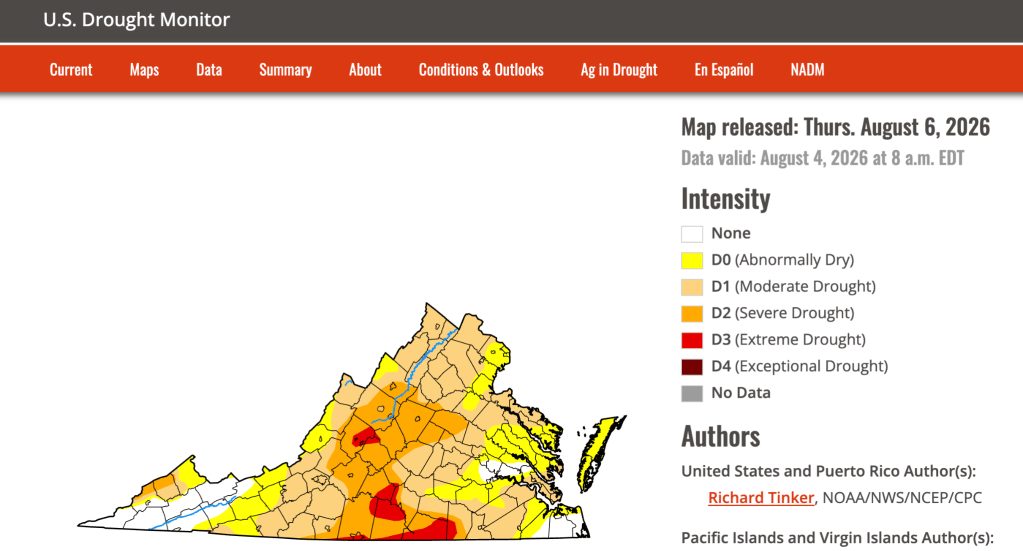
So things are slowly improving, but wineries are showing the impact of sustained dry conditions- those who are getting fruit this year see smaller, sparser clusters (some noting that there is better concentration of flavor in the grapes), and others are noting the loss of vines to freeze damage and making plans for replanting.
But here is where it gets interesting.
Site by site, things are totally different. Virginia is full of microclimates that experience each weather event differently. Remember my freeze post? Check this out:
Ankida Ridge in Amherst is growing grapes a good 1800 feet above sea level – it should have been quite cold during the April 21st freeze – but they remained above freezing overnight. They’ll have a smaller harvest due to ongoing drought and Spotted Lantern Fly damage, but will still see good grapes come in to make wine.
Fifty Third Winery is growing grapes onsite in Louisa and also at their Simmons Gap property. The Louisa property lost almost everything in the frost, but Simmons Gap only saw damage to lower elevation plantings. They will see some potentially amazing grapes make it to harvest.
Wineries at moderate altitudes like Arterra and Pollak sit on interesting mountainsides that either deflect storms and cold, or allow cold air to sink into valleys below, protecting more of the vines and buds and allowing good wine to come forth even in the hardest seasons.
Virginia isn’t a single climate or zone, and each AVA is quite different. There are significant differences within each AVA too. This is where the magic is, and why Virginia is making some of the most interesting wines available. Farming practice, site specificity, and response to shifting and unpredictable conditions are everything and these conditions produce wines that are distinctive and uniquely expressive of the time and place where they were grown and made.
A Record-Setting Harvest??
Around the globe, we’re seeing super early harvests. Wine friend Kenny shared this article from an industry news source that describes just how widespread early wine grape harvest is this year.
2026 has been a year of extremes – frost, hail, wildfires, droughts and record-breaking heat. Grapes that have managed to survive the deluge have been put on the fast track to maturity, and in regions across the world, harvest is well under way.
Champagne, Bordeaux, Burgundy, Languedoc, Provence, Roussillon, Sicily, Santa Barbara (harvest began as early as June 30!), Napa, Catalonia and the list goes on and on, are already harvesting grapes, or are about to kick it off.
The author forgot Virginia. Virginia is also doing some of the earliest harvesting ever of wine grapes, at least in and around Charlottesville/Monticello AVA. Pollak has been posting about Sauvignon Blanc and Chardonnay grapes coming into the winery. The end result of climate change and the intense drought is lower yields and earlier harvest. The grapes are truly struggling – let’s hope this gives us incredible wines. And to top it off, we had a massive hail storm outside CVille on Friday, and that could have hit some ripening wine grapes very hard! I’m waiting for reports!
We don’t know what tomorrow brings, but I am definitely looking forward to what does come from the 2026 vintage – our winemakers are now preparing and working hard to harvest, ferment, and put in barrel and tank to age and develop some incredible wines, and we will start enjoying those in about a year or two. And there is plenty of great wine to enjoy between now and then.
Oh, and here we are now on the drought map:
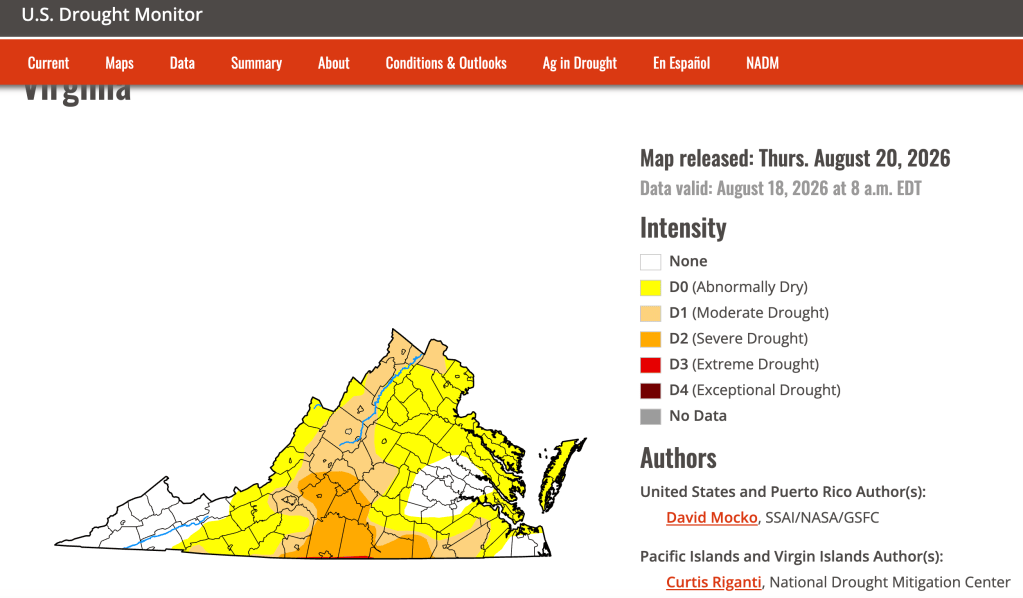
The last few days of heavy rain have done a ton of good for groundwater (although all that hail and wind may have made this very early harvest rough!). Fingers crossed we get back to more “normal” Virginia weather. Whatever that is.
Thanks for reading these thoughts on what makes Virginia Wine special, and thanks for being part of the Virginia Wine community. I contend that it’s still the best kept secret out there, and I will keep bringing family and friends to Virginia Wine over and over until you are all converts. Sante!


